









By Westonerz.com Investigative Desk
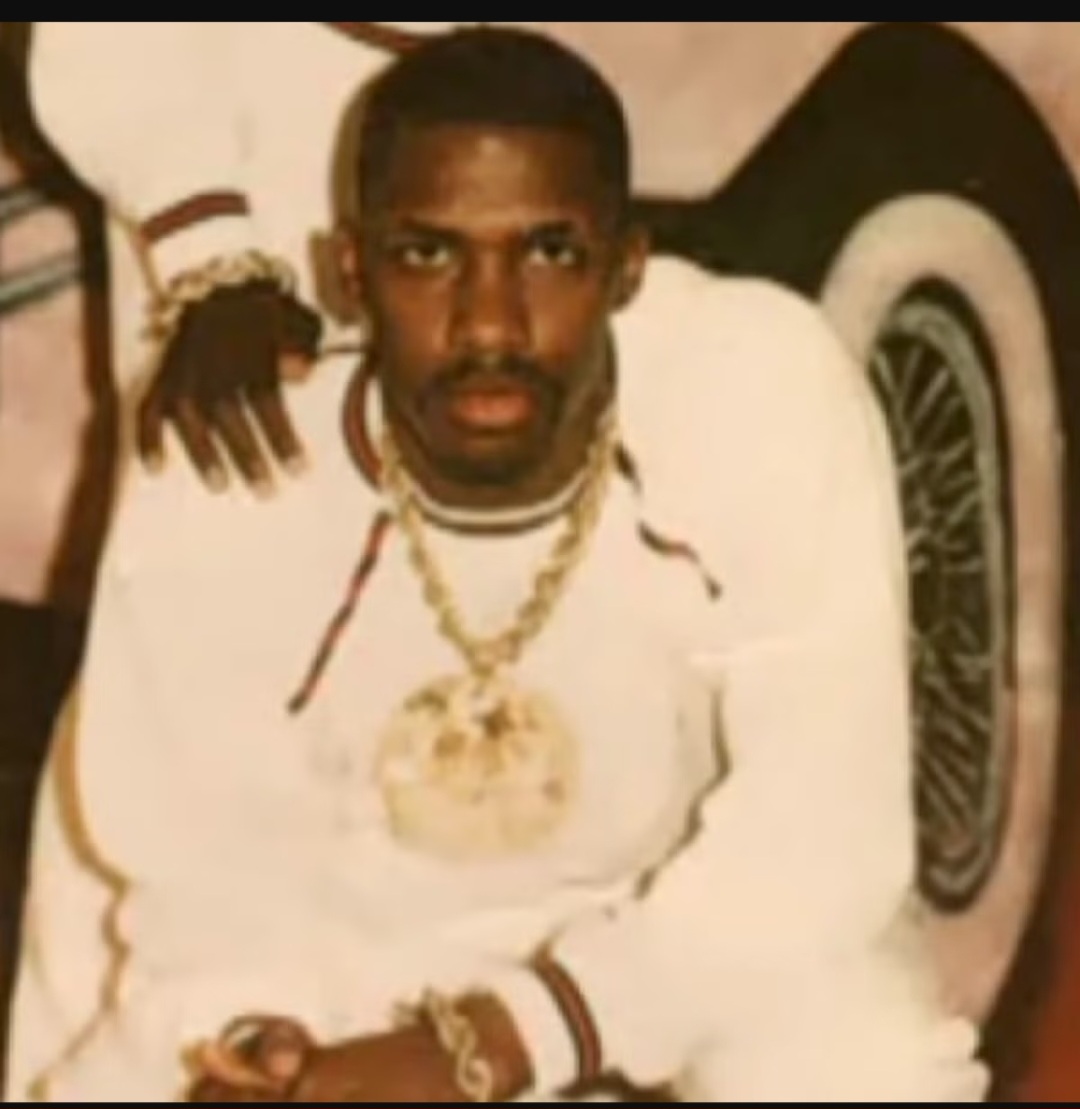
During the height of America’s crack cocaine epidemic, one name became synonymous with power, wealth, and the devastating drug trade that transformed urban communities across the nation: Rayful Edmond III.
By the late 1980s, Edmond had risen from the streets of Washington, D.C., to become one of the most powerful drug traffickers in the United States. Federal authorities estimated that his organization was responsible for distributing hundreds of kilograms of cocaine throughout the nation’s capital and surrounding regions, generating millions of dollars in profits while fueling an epidemic that would leave lasting scars on countless communities.
Unlike many drug kingpins who operated in the shadows, Rayful Edmond’s influence became impossible to ignore. His organization controlled vast sections of the Washington drug market, employed hundreds of individuals, and generated enormous wealth. At its peak, investigators believed his empire was one of the largest crack cocaine operations in America.

His rise was meteoric. His fall was equally dramatic.
Growing Up in the Nation’s Capital
Rayful Edmond III was born on November 26, 1964, in Washington, D.C. Unlike many future drug traffickers, Edmond did not come from extreme poverty. His mother, Constance “Bootsie” Perry, operated a successful beauty salon and was well known in local social circles.
Friends and acquaintances described Edmond as intelligent, charismatic, and ambitious. Yet during the late 1970s and early 1980s, Washington was undergoing dramatic changes. Cocaine was becoming increasingly available, and a new generation of traffickers saw opportunities to earn fortunes that traditional employment could never provide.
Drawn by the lure of fast money and status, Edmond entered the narcotics trade while still a young man.
Few could have imagined how quickly he would rise.
Building a Criminal Empire
By the mid-1980s, Edmond had established himself as a major player in Washington’s cocaine market.
What separated him from ordinary street dealers was his ability to secure direct access to large quantities of cocaine. Investigators later alleged that Edmond developed relationships with major suppliers capable of providing shipments on a scale rarely seen in the region.
This access gave him a tremendous advantage.
While competitors struggled to obtain product, Edmond maintained a steady supply, allowing him to dominate distribution networks throughout Washington, Maryland, and Virginia.
As crack cocaine exploded in popularity, demand became nearly insatiable.
His profits soared.
Federal investigators later estimated that Edmond’s organization moved hundreds of kilograms of cocaine annually, generating extraordinary sums of money and making him one of the wealthiest traffickers of the era.
The Rise of Crack Cocaine
The emergence of crack cocaine fundamentally changed the drug trade in America.
Unlike powder cocaine, crack could be sold in smaller quantities at lower prices, making it accessible to a broader market. The result was an explosion in addiction rates across many urban communities.
Washington, D.C., became one of the epicenters of the epidemic.
Authorities alleged that Edmond’s organization played a significant role in supplying the region’s crack market during this period.
Neighborhoods that had once been stable experienced rising crime, addiction, unemployment, and violence. Families were torn apart as crack addiction spread through communities at an alarming pace.
The profits generated by the drug trade were immense.
The social cost was even greater.
Wealth, Influence, and Power
As his empire expanded, so did Edmond’s wealth.
Luxury automobiles, expensive jewelry, designer clothing, and lavish homes became symbols of his success. Witnesses described a lifestyle that seemed almost unimaginable to ordinary residents.
Money flowed freely.
His organization employed distributors, couriers, enforcers, stash-house operators, and street-level dealers. Entire networks depended on the operation for income.
For many young people growing up in neighborhoods affected by poverty and limited opportunities, Edmond became a symbol of success, power, and influence.
But that success came at a dangerous price.
The larger his operation became, the more attention it attracted from law enforcement agencies.
Federal Authorities Close In
By the late 1980s, federal investigators had identified Edmond as one of the nation’s highest-priority narcotics targets.
The Drug Enforcement Administration, FBI, and local law enforcement agencies launched extensive investigations into his organization.
Using informants, surveillance operations, financial records, and wiretaps, authorities began assembling a case against the kingpin and his associates.
The evidence painted a picture of a highly organized enterprise responsible for distributing massive quantities of cocaine throughout the Washington metropolitan area.
After years of investigation, federal prosecutors were ready to strike.
Arrest and Conviction
In 1989, Rayful Edmond was arrested and charged with major federal narcotics offenses.
Prosecutors accused him of leading a criminal organization responsible for flooding Washington, D.C., with cocaine during the height of the crack epidemic.
The evidence against him was overwhelming.
Following his conviction, Edmond received a sentence of life imprisonment without the possibility of parole.
For federal authorities, the conviction represented a significant victory in the nation’s escalating War on Drugs.
For Edmond, it marked the collapse of an empire that had generated millions of dollars and influenced thousands of lives.
Many believed his criminal career was finally over.
They were mistaken.
Running a Drug Network from Prison
One of the most astonishing chapters in Edmond’s story occurred after his conviction.
Federal investigators later discovered evidence suggesting that Edmond continued to maintain connections to drug trafficking operations while incarcerated.
Authorities alleged that he remained influential within criminal circles and continued communicating with associates involved in narcotics distribution.
The revelations shocked investigators and demonstrated the extraordinary reach of his network.
Even behind bars, Edmond remained a powerful figure.
Additional prosecutions followed, further cementing his reputation as one of the most influential traffickers of his generation.
Cooperation and a New Chapter
Years later, Edmond made a decision that surprised many observers.
He agreed to cooperate with federal authorities.
His information reportedly assisted investigations targeting major drug trafficking organizations and international suppliers operating throughout the Americas.
The cooperation significantly altered his relationship with law enforcement.
Once viewed solely as one of America’s most dangerous drug kingpins, Edmond became a valuable source of intelligence regarding large-scale narcotics operations.
The decision also generated controversy within criminal circles, where cooperation with authorities is often viewed as the ultimate betrayal.
The Lasting Impact of the Rayful Edmond Era
The story of Rayful Edmond cannot be separated from the broader history of the crack cocaine epidemic.
His organization became one of the most recognizable symbols of an era that transformed American cities and devastated countless communities.
Washington, D.C., experienced record levels of violence during the late 1980s and early 1990s. Entire neighborhoods struggled under the weight of addiction, crime, and economic instability.
While Edmond was not solely responsible for these conditions, his operation became one of the most prominent examples of how large-scale drug trafficking contributed to the crisis.
His legacy remains deeply controversial.
Some view him as a brilliant strategist who built a powerful enterprise from the streets of Washington.
Others see him as a central figure in a drug epidemic that left lasting damage across generations.
Conclusion
Rayful Edmond III’s rise from local dealer to one of the most powerful drug kingpins in America is one of the most extraordinary stories in the history of organized crime.
Through ambition, strategic relationships, and access to massive cocaine supplies, he built an empire that dominated Washington, D.C., during one of the most turbulent periods in the city’s history.
Yet like many criminal empires built on narcotics trafficking, his organization ultimately collapsed under the weight of federal investigations and criminal prosecutions.
Today, the name Rayful Edmond remains synonymous with the crack era—a reminder of both the immense fortunes generated by the drug trade and the devastating human cost left in its wake.
His story continues to serve as one of the most important and cautionary chapters in the history of American organized crime.
See one of the many Rayful Edmond’s documentary on YouTube.