










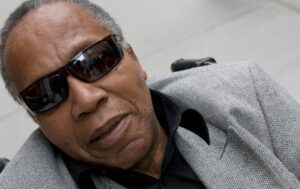
Frank Lucas: The Harlem Drug Kingpin Behind One of America’s Most Notorious Criminal Empires
By Westonerz.com Investigative Desk
Few figures in the history of American organized crime have generated as much fascination, controversy, and debate as Frank Lucas. Known for his intelligence, ambition, and ruthless business instincts, Lucas rose from humble beginnings in the segregated South to become one of the most powerful heroin traffickers in New York City during the late 1960s and early 1970s.
His story would later inspire books, documentaries, and the Hollywood film American Gangster, introducing his name to millions around the world. Yet behind the Hollywood portrayal lies a far more complex story of crime, wealth, violence, corruption, betrayal, and redemption.
For many, Frank Lucas symbolizes the rise of independent Black criminal enterprises during a transformative period in American history. For others, he represents the devastating impact of the heroin epidemic that ravaged communities throughout the United States.
Regardless of perspective, Frank Lucas remains one of the most influential and controversial figures ever to emerge from America’s underworld.
Growing Up in the Jim Crow South
Frank Lucas was born on September 9, 1930, in La Grange, North Carolina, during an era of racial segregation and widespread discrimination throughout the American South.
Lucas often spoke about witnessing racial violence and injustice as a child, experiences that profoundly shaped his worldview. Growing up in poverty, he learned early that opportunities for African Americans were limited and that survival often required resilience and resourcefulness.
As a young man, Lucas eventually left North Carolina and relocated to New York City, where he settled in Harlem. The neighborhood was undergoing significant social and economic changes, and like many newcomers searching for opportunity, Lucas found himself drawn into the city’s criminal underworld.
Learning Under Bumpy Johnson
One of the defining chapters of Lucas’s life was his association with the legendary Harlem crime boss Ellsworth “Bumpy” Johnson.
Johnson was widely regarded as one of Harlem’s most influential underworld figures, commanding respect from both criminals and community members. Lucas became one of Johnson’s trusted associates and reportedly learned valuable lessons about business, loyalty, discipline, and power.
According to Lucas, Johnson taught him to avoid unnecessary attention, maintain professionalism, and think strategically rather than emotionally.
These lessons would later become the foundation of Lucas’s criminal empire.
When Bumpy Johnson died in 1968, a power vacuum emerged within Harlem’s underworld.
Frank Lucas saw an opportunity.
Building an Independent Drug Empire
Unlike many traffickers who relied on traditional organized crime networks for supply, Lucas sought to eliminate middlemen and establish direct relationships with heroin producers.
This strategy dramatically increased profits while reducing dependence on rival criminal organizations.
Lucas traveled extensively and developed connections that allowed him to purchase heroin directly from suppliers in Southeast Asia.
By cutting out intermediaries, he was able to offer high-quality heroin at competitive prices while generating enormous profits.
His product became known on the streets as “Blue Magic,” a brand that gained a reputation for purity and consistency.
At a time when many drug dealers diluted their products to maximize profits, Lucas understood that quality created customer loyalty.
The strategy worked.
His operation expanded rapidly throughout New York City and into other major markets.
Challenging Traditional Organized Crime
One reason Frank Lucas became such a significant figure was his willingness to challenge long-established power structures.
For decades, portions of the narcotics trade had been heavily influenced by Italian-American organized crime families.
Lucas refused to accept that arrangement.
Instead, he built an independent network that allowed him to control distribution, pricing, and logistics without answering to traditional Mafia organizations.
This independence made him both wealthy and dangerous.
Law enforcement officials estimated that Lucas’s organization generated millions of dollars annually through heroin trafficking.
At its peak, he was believed to be among the most powerful narcotics traffickers in the United States.
Wealth, Luxury, and Visibility
As his empire grew, Lucas accumulated extraordinary wealth.
He purchased luxury automobiles, expensive properties, designer clothing, and other symbols of success.
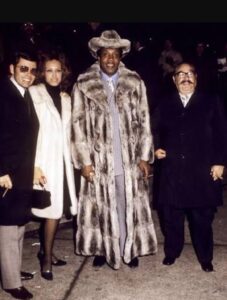
One famous story often repeated involves Lucas attending a major boxing match wearing an extravagant mink coat and hat worth tens of thousands of dollars.
The display allegedly attracted unwanted attention from law enforcement officials who wondered how a relatively unknown Harlem businessman could afford such extravagant purchases.
Whether entirely accurate or somewhat embellished over time, the story reflects an important reality.
Lucas was becoming increasingly visible.
And visibility can be dangerous in the criminal world.
Corruption and Influence
Federal investigators alleged that Lucas’s organization relied not only on drug trafficking but also on corruption.
Authorities accused members of his network of bribing law enforcement officers and using corrupt relationships to protect their operations.
Several police officers were eventually implicated in corruption investigations connected to narcotics trafficking during that era.
The revelations shocked the public and exposed vulnerabilities within the criminal justice system.
The case highlighted how organized crime could extend its influence beyond the streets and into institutions responsible for enforcing the law.
The Investigation
As Lucas’s reputation grew, federal, state, and local authorities intensified their efforts to dismantle his organization.
Investigators conducted surveillance, monitored financial transactions, cultivated informants, and assembled evidence linking Lucas and his associates to large-scale narcotics distribution.
The operation eventually became one of the most significant drug investigations of its time.
Authorities targeted not only Lucas but also members of his family and trusted associates who allegedly participated in the enterprise.
The pressure mounted steadily throughout the early 1970s.
Arrest and Conviction
In 1975, Frank Lucas was arrested and charged with federal drug offenses.
The government presented evidence alleging that he had overseen a major heroin trafficking operation responsible for distributing narcotics throughout New York and beyond.
Lucas was ultimately convicted and received a lengthy prison sentence.
For a man who had built a multimillion-dollar empire, the conviction marked a dramatic fall from power.
The criminal empire that once seemed unstoppable began to unravel.
Cooperation with Authorities
Facing the possibility of spending the remainder of his life behind bars, Lucas made a decision that would dramatically alter his future.
He agreed to cooperate with federal authorities.
According to investigators, Lucas provided information regarding drug traffickers, corrupt officials, and criminal networks.
His cooperation led to numerous arrests and prosecutions.
As a result, portions of his sentence were reduced.
The decision, however, came with significant consequences.
Many individuals within the criminal underworld viewed cooperation with law enforcement as the ultimate betrayal.
Threats against Lucas reportedly increased, and authorities eventually placed him and members of his family under protection.
Life After Prison
Unlike many organized crime figures who returned to criminal activity after release, Lucas spent much of his later life speaking publicly about his experiences.
He participated in interviews, documentaries, and media appearances discussing the realities of organized crime and the choices that shaped his life.
In 2007, the release of American Gangster, starring Denzel Washington as Frank Lucas, renewed public interest in his story.
The film became a major commercial success and introduced Lucas to a global audience.
While the movie captured many elements of his rise and fall, historians and journalists have noted that some aspects were dramatized for entertainment purposes.
Nevertheless, the film cemented Lucas’s place in popular culture.
Death and Legacy
Frank Lucas died on May 30, 2019, at the age of 88.
His death marked the end of one of the most remarkable and controversial chapters in American organized crime history.
His legacy remains deeply divided.
Supporters often point to his intelligence, entrepreneurial mindset, and ability to challenge established power structures.
Critics emphasize the devastating consequences of heroin trafficking and the damage inflicted upon communities affected by addiction.
Both perspectives contain elements of truth.
Lucas was undeniably a skilled strategist who built an unprecedented criminal enterprise.
At the same time, the business that generated his wealth contributed to suffering, addiction, and violence across countless neighborhoods.
Conclusion
Frank Lucas’s story is ultimately one of ambition and consequence.
From the tobacco fields of North Carolina to the streets of Harlem, he rose to extraordinary heights through intelligence, determination, and criminal enterprise. He challenged traditional underworld power structures, amassed a fortune, and became one of the most recognizable figures in American narcotics history.
Yet the empire he built proved unsustainable.
Investigations, prosecutions, and betrayals eventually dismantled the organization that had made him wealthy and powerful.
Today, Frank Lucas remains one of the most studied figures in the history of organized crime—a man whose life reflects both the allure of power and the inevitable consequences that often accompany it.
His rise, fall, and enduring legacy continue to fascinate historians, law enforcement officials, and the public decades after the height of his influence.
Check out both frank lucas documentaries here. https://youtu.be/kScCL5EumGU?is=tRzqSyySDGBIY4cQ