








President Donald Trump has ordered major changes to the White House’s South Lawn as part of his latest construction project, reshaping the lawn’s slope to bring it level with a new helipad nearby.
Construction crews have been working around the clock to complete the helipad ahead of Chinese President Xi Jinping‘s expected state visit next month. Workers are now raising the lawn to match the pad’s height, according to photographs of the site and two people familiar with the plans who spoke to The Washington Post on condition of anonymity.
A White House official confirmed that the project involves adjusting the lawn’s slope. “The lawn will gently be reshaped to meet the new helipad,” the official told The Washington Post.
A helipad project that keeps growing
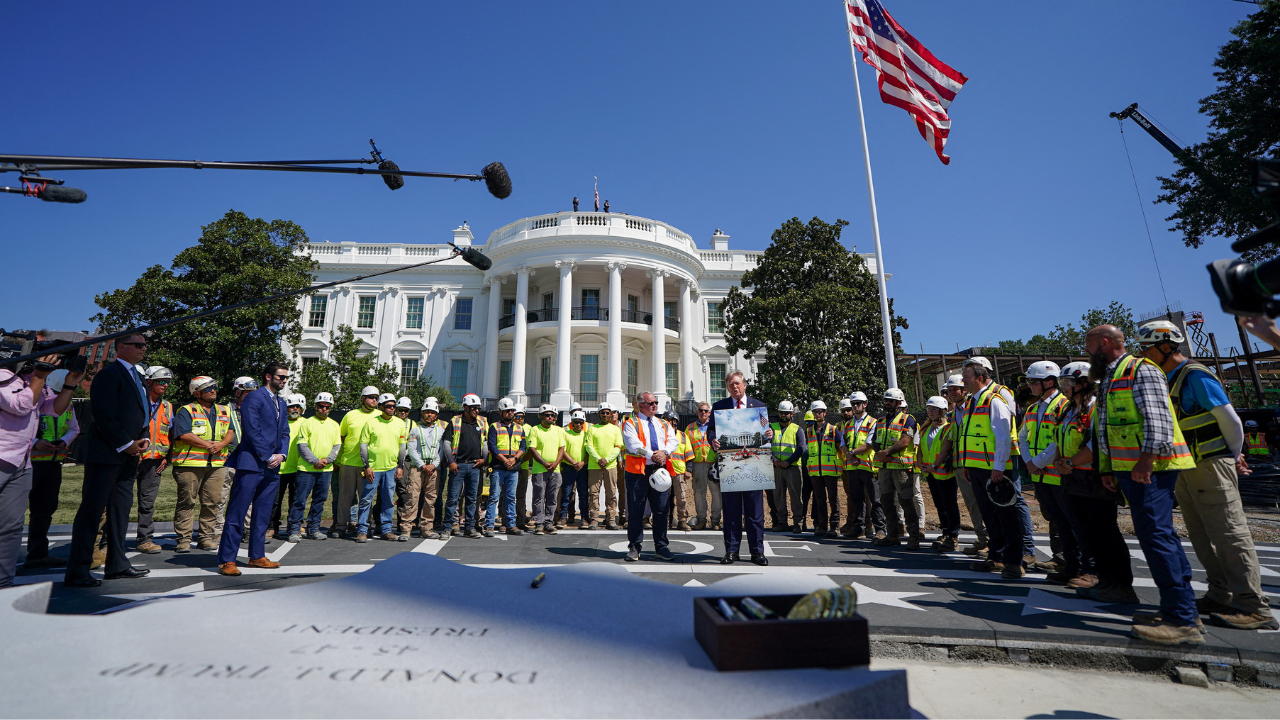
The helipad project, which also includes changes to the White House driveway and South Portico, was originally estimated to cost $13 million, according to contractor records. That figure predates the newly reported work on the South Lawn, and it remains unclear how much the additional construction will cost. The White House did not immediately respond to questions about the added expenses.
The helipad is part of a much larger collection of construction projects Trump has launched at the White House and around Washington. The report has estimated their combined cost at roughly $927 million.
Trump shows off the site to schoolchildren
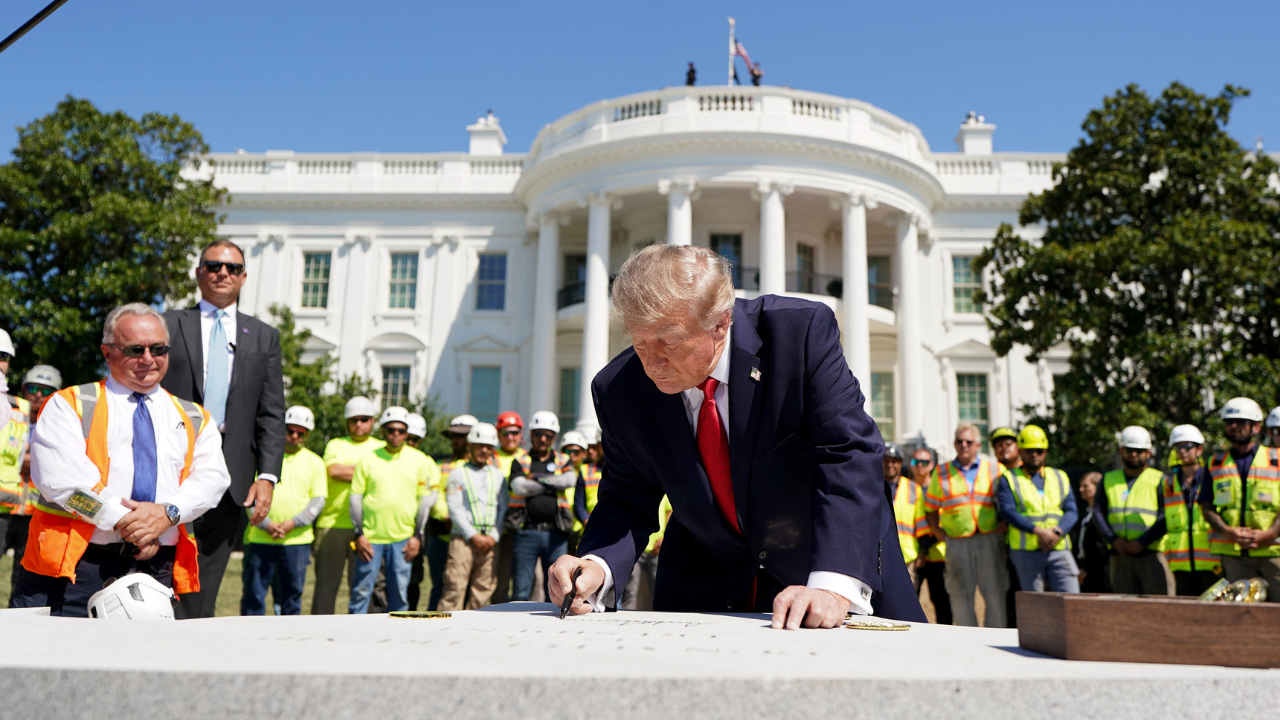
Trump toured the construction site Monday, August 24, with children who attended a Back to School event in the Rose Garden. Education Secretary Linda McMahon and Nebraska Gov. Jim Pillen also joined him, along with families attending the event.
“I love construction,” Trump said, according to GB News editor Tom Harwood, who was present. “Kids love construction.”
It was unclear whether Trump specifically discussed the lawn’s slope during the visit, as pool reports did not mention him addressing the issue.
A rocky restart for the helipad
The helipad has already undergone a major redesign. Earlier this month, crews spent weeks working around the clock before Trump ordered the project redone, requiring workers to dismantle a 100-foot-wide presidential seal engraved in granite that had been installed as the planned landing marker for Marine One. Workers used jackhammers to remove the seal, the Associated Press reported, though the reason was initially unclear.
Two people familiar with the project said that Trump wanted a landing pad level with the horizon, meaning the previously completed work had to be dismantled so the sloped South Lawn could be leveled. Trump then began questioning the lawn’s existing incline.
“We had a lot of slope on it, and I felt it was too much slope,” Trump told reporters during a tour of the project.
Initial work on the helipad began after crews removed a fighting arena installed on the South Lawn for the “Freedom 250 UFC” event celebrating Trump’s 80th birthday in June. The helipad is the latest in a series of construction projects Trump has launched around Washington since returning to office.
The ballroom gets the green light
Construction is also continuing on Trump’s controversial White House ballroom project after the Supreme Court temporarily paused a lower-court ruling that could have halted the work.
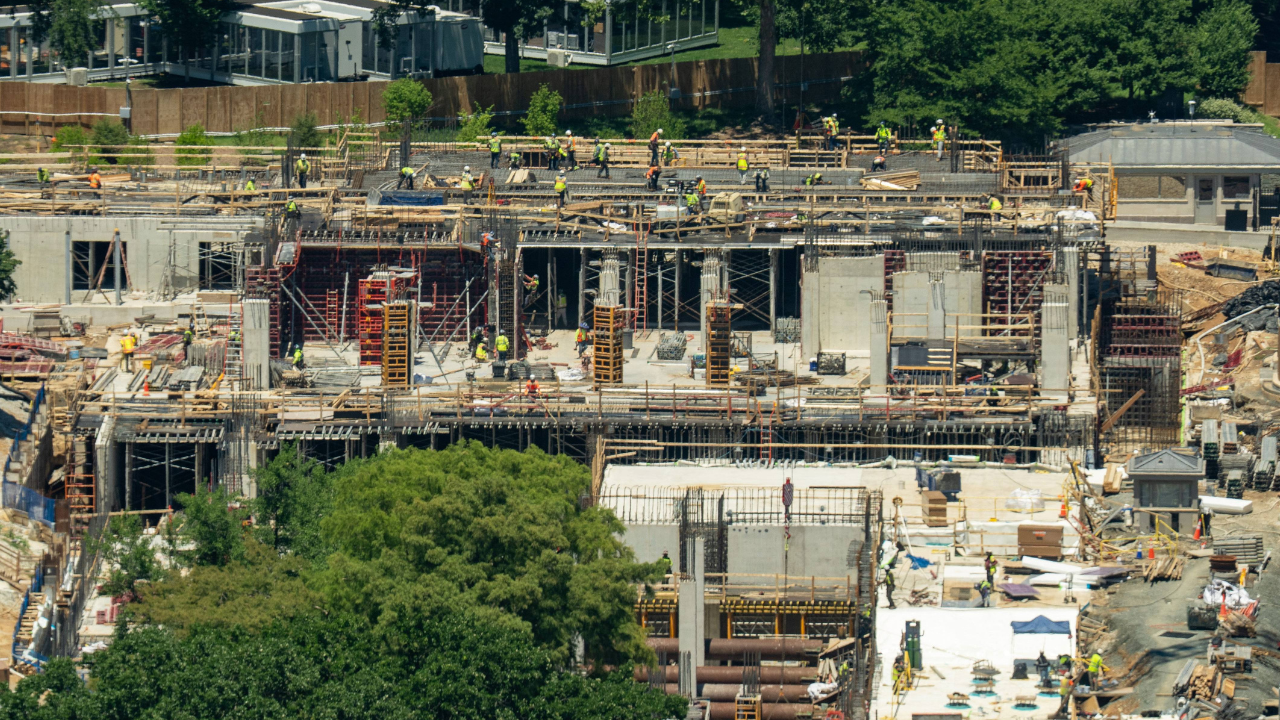
Chief Justice John Roberts ordered the lower-court ruling paused while the justices consider Trump’s request to block enforcement of rulings that would stop construction. The National Trust for Historic Preservation brought the legal challenge, arguing Trump lacked authority to demolish the White House’s East Wing for the ballroom.
In court filings, the administration said the roughly $400 million privately funded project was 65% complete as of August 14, with 250 workers operating 20 hours a day, seven days a week. Trump has previously put the ballroom’s cost at about $300 million and repeatedly said taxpayers will not pay for it.
Trump celebrated the Supreme Court’s stay on social media, calling the project “THE GREATEST OF ITS KIND!” and saying construction was “under budget and ahead of schedule.”
A defining feature of Trump’s second term
Trump’s construction projects at the White House and around Washington have become a defining feature of his second term. Trump biographer Maggie Haberman has estimated that the projects occupy about 70% of the president’s mental focus.
Press Secretary Karoline Leavitt acknowledged in October that the ballroom was the president’s “main priority” as the East Wing was being demolished. Months later, Trump reportedly abruptly left a meeting to look out a window at the construction site.
The former real estate developer has used his second term to remake parts of the White House and its grounds, including paving over the Rose Garden lawn, adding flagpoles to the North and South Lawns, installing artwork depicting himself and adding gold-toned flourishes to the Oval Office.