










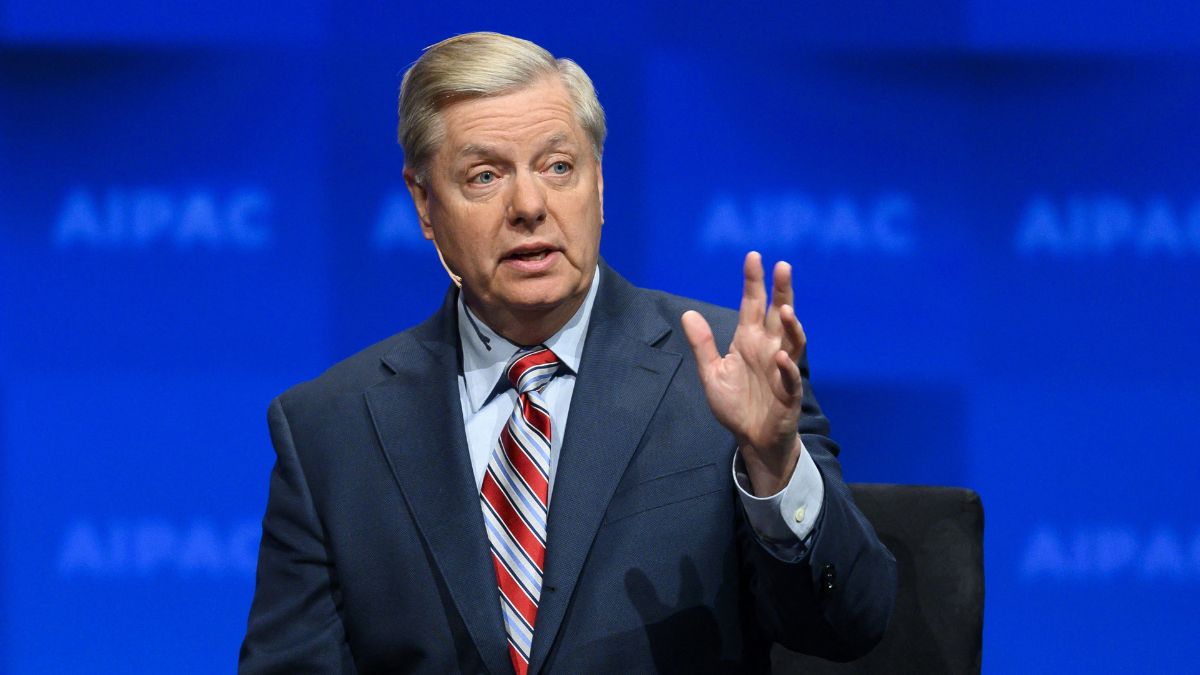
Republican Sen. Lindsey Graham of South Carolina, one of President Donald Trump‘s closest allies in Congress, died Saturday, July 11, 2026, at his Washington, D.C., home at age 71. His death deprives Republicans of one of their most influential dealmakers as they try to advance Trump’s legislative agenda with a narrow Senate majority.
Graham’s office said he died following a “brief and sudden illness.” A preliminary examination by the District of Columbia medical examiner found the cause of death to be aortic dissection caused by arteriosclerotic cardiovascular disease.
The senator died hours after returning from Ukraine. Trump said he spoke with Graham, telling reporters it “could’ve been his last call.”
Writing on social media Sunday, Trump called Graham “one of the greatest people and Senators I have ever known,” describing him as “always working” and “a true American Patriot.”
Senate Majority Leader John Thune said Graham was “a strong advocate for the United States and a strong ally to freedom-loving countries across the globe,” adding that “Lindsey fought passionately for the Palmetto State” and was “a trusted adviser and colleague to me and many others.”
Why Graham’s absence matters for Trump’s agenda
As chairman of the Senate Budget Committee, Graham played a central role in advancing Trump’s legislative priorities through party-line votes. Though known for bipartisan dealmaking, he remained one of Trump’s most reliable defenders.
His death, coupled with Sen. Mitch McConnell‘s continued hospitalization, temporarily reduced the GOP’s working Senate majority to 51-47, complicating efforts to move Trump’s agenda before the November midterm elections. But Graham’s sister, Darline, was sworn in on July 14 to finish his term.
Todd Blanche’s attorney general confirmation faces tighter path
The Senate Judiciary Committee is scheduled to hold confirmation hearings for Todd Blanche, Trump’s nominee for attorney general and former personal attorney, on July 15 and 16.
Without Graham, Republicans have a narrower advantage on the committee, meaning a single GOP defection could block Blanche’s nomination.
According to Politico, Republican leaders had expected Graham to help rally support for Blanche.
Sen. Thom Tillis has said he would oppose any attorney general nominee who appears to downplay the violence against law enforcement during the January 6, 2021, Capitol attack. Speaking to CNN last month, Tillis said any indication during the hearings that Blanche lacks independence could cost him his vote.
SAVE America Act loses its chief advocate
Graham’s death also deals a blow to the Safeguard American Voter Eligibility (SAVE) America Act, which Trump has urged the Senate to pass.
The bill would require proof of citizenship and voter identification to vote and already faced steep odds because it would require overcoming the Senate’s 60-vote filibuster threshold.
Appearing on NBC’s Meet the Press, Trump said Graham had called shortly before his death to tell him “we’re all set for the Save America Act.”
Trump called Graham’s death “a big blow” to the bill, adding the senator had been “pushing for the SAVE America Act like crazy.”
Defense policy bill loses a key floor manager
Graham’s absence could also complicate consideration of Trump’s proposed $1.5 trillion defense budget.
Republican leaders had hoped to bring the National Defense Authorization Act to the Senate floor before the August recess, with Graham expected to help manage debate, according to Politico.
Democrats have separately threatened to block the measure over the Iran war. Politico reported that Democratic senators are considering delaying the bill, while Reuters reported that several senators want debate first on proposals to strengthen military ties with Israel.
Budget reconciliation package left without its architect
A second reconciliation package, which includes $350 billion in additional defense spending and could pass with a simple majority, also faces uncertainty without Graham leading the Budget Committee.
Sen. Ron Johnson of Wisconsin is expected to become committee chairman following Graham’s death.
Johnson has repeatedly questioned rising defense spending and argued that reconciliation should focus on reducing the federal deficit, raising uncertainty about how the package could change under his leadership.