Nicky Barnes: Harlem Kingpin
By Westonerz.com Investigative Desk
During the 1970s, few names carried more weight on the streets of New York City than Leroy Nicholas Barnes, better known as Nicky Barnes. At the height of his power, Barnes controlled a heroin empire worth millions of dollars, commanded a vast criminal organization, and became one of the most feared figures in the American underworld.
Unlike many crime bosses who operated in the shadows, Barnes embraced the spotlight. His extravagant lifestyle, expensive cars, designer suits, and celebrity status made him one of the most recognizable drug kingpins in American history. But the publicity that fueled his reputation would ultimately contribute to his downfall.
His story is one of ambition, wealth, power, betrayal, and redemption—a remarkable journey from Harlem drug dealer to America’s most notorious heroin trafficker and eventually a federal informant living under witness protection.
Early Life in Harlem
Leroy Nicholas Barnes was born on October 15, 1933, in Harlem, New York. Growing up during an era marked by poverty, crime, and racial inequality, Barnes struggled academically and became involved in street crime at an early age.
Barnes fell into drug dealing and subsequently became a heavy heroin user in his teens and 20s, committing petty crimes to support his habit.
Overcoming the Habit: During a 1965 prison sentence for low-level drug dealing, Barnes met Italian mobsters like “Crazy” Joe Gallo and Matthew Madonna. They mentored him on the structure of organized crime and firmly advised him that to become a successful drug lord, he must stop using his own product.
Upon his release, Barnes entered New York’s growing narcotics underworld. During the 1960s, heroin addiction was devastating neighborhoods across the city, creating enormous profits for traffickers willing to take the risk.
Barnes quickly demonstrated an ability to organize, manage, and expand operations beyond the level of an ordinary street dealer.
Building the Harlem Drug Empire
By the late 1960s and early 1970s, Barnes had become one of Harlem’s most influential narcotics traffickers.
Unlike traditional street dealers, he approached drug trafficking as a business enterprise.
He recruited trusted associates, developed distribution networks, and established relationships with major suppliers. His organization became known for its efficiency and ability to move large quantities of heroin throughout New York City and beyond.
At its peak, authorities estimated that Barnes’ operation generated millions of dollars annually.
The organization controlled significant portions of the heroin trade in Harlem and maintained connections to criminal groups throughout the Northeast.
The Council
One of Barnes’ most significant achievements was helping create an alliance known as The Council.
The Council consisted of powerful Black drug traffickers who joined together to coordinate business activities, settle disputes, and reduce violence among competing organizations.
The concept was revolutionary.
Instead of engaging in constant warfare over territory and profits, members cooperated to maximize earnings and maintain stability.
Federal investigators viewed The Council as one of the most sophisticated criminal organizations ever established by independent Black traffickers.
Through The Council, Barnes expanded his influence far beyond Harlem.
His reach extended into multiple cities, making him one of the most powerful narcotics traffickers in America.
The Rise of “Mr. Untouchable”
By the mid-1970s, Barnes’ wealth had become impossible to ignore.
He owned luxury vehicles, expensive jewelry, custom-tailored clothing, and lavish residences. His public appearances attracted attention from both the media and law enforcement.
In 1977, The New York Times Magazine famously featured Barnes on its cover with the headline:
“Mr. Untouchable.”
The article portrayed Barnes as a powerful drug kingpin who appeared immune from prosecution despite extensive investigations by local and federal authorities.
The nickname would become legendary.
However, the publicity created a dangerous problem.
Barnes was no longer operating in the shadows.
He had become a national symbol of the heroin epidemic.
Presidential Attention
The magazine cover reportedly caught the attention of U.S. President Jimmy Carter.
According to multiple accounts, Carter was outraged that a major drug trafficker was being portrayed as untouchable.
Federal authorities intensified their efforts to dismantle Barnes’ organization.
The increased pressure eventually led to a series of investigations, prosecutions, and arrests targeting members of his criminal network.
What followed would forever change Barnes’ life.
Arrest and Conviction
Federal prosecutors built a comprehensive case against Barnes using surveillance, informants, financial records, and testimony from former associates.
In 1978, Barnes was convicted on federal racketeering and narcotics charges.
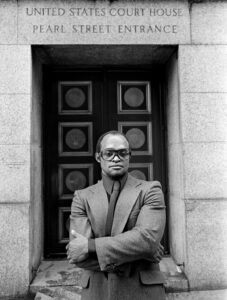

The court imposed a life sentence without parole.
For a man who had spent years enjoying extraordinary freedom and wealth, the sentence represented a devastating fall from power.
Initially, Barnes believed members of his organization would remain loyal while he served his time.
Instead, he discovered something very different.
Betrayal Behind Bars
While incarcerated, Barnes learned that several trusted associates had taken control of portions of his empire.
Many of the individuals he considered friends were allegedly enjoying the wealth he had helped create while distancing themselves from him and his family.
The betrayal deeply affected him.
According to Barnes, some former associates failed to support his loved ones despite promises to do so.
Others allegedly sought to erase his influence altogether.
Faced with life in prison and abandoned by many of those closest to him, Barnes made a decision that shocked the criminal underworld.
Becoming a Federal Informant
In the early 1980s, Barnes agreed to cooperate with federal authorities.
The once-feared drug kingpin began providing information about his former associates, criminal operations, and members of The Council.
His cooperation led to numerous arrests, convictions, and the dismantling of significant portions of the organization he had helped build.
Many within the criminal world viewed Barnes as a traitor.
Law enforcement officials, however, considered him one of the most valuable informants in the history of organized crime investigations.
His testimony provided an unprecedented look into the structure and operation of major narcotics organizations.
Witness Protection and a New Life
Following his cooperation, Barnes entered the Federal Witness Protection Program.
He received a reduced sentence and eventually secured his release.
Living under a new identity, Barnes spent decades away from the public spotlight.
In later years, he openly discussed his criminal past through interviews, books, and documentaries.
His autobiography and media appearances offered rare insight into the realities of the drug trade, organized crime, and the consequences of a life built on illegal activity.
Cultural Impact
Nicky Barnes remains one of the most recognizable figures of the American drug trade.
His life inspired books, documentaries, and films examining the rise of heroin trafficking in New York during the 1970s.
The documentary Mr. Untouchable introduced his story to a new generation, detailing both his rise to power and his transformation into a government witness.
Unlike many criminal figures who died violently or disappeared, Barnes lived long enough to reflect publicly on his choices and their consequences.
Death and Legacy
Nicky Barnes died in 2012 at the age of 78.
His death marked the end of one of the most remarkable chapters in American organized crime history.
His legacy remains complex.
To law enforcement, he was a major narcotics trafficker whose organization contributed to the heroin epidemic that devastated countless communities.
To historians, he represented a new era in organized crime, where independent Black criminal enterprises challenged traditional underworld power structures.
To many observers, his story serves as a cautionary tale about the corrupting influence of money, power, and fame.
Conclusion
Nicky Barnes rose from the streets of Harlem to become one of the most powerful drug kingpins in America. Through intelligence, ambition, and organization, he built a criminal empire that generated millions of dollars and earned him the nickname “Mr. Untouchable.”
Yet his greatest enemy was not law enforcement—it was loyalty.
The betrayals he experienced behind bars led him to cooperate with federal authorities, ultimately helping dismantle the very organization he created.
His rise and fall remains one of the most dramatic stories in the history of American organized crime, illustrating how power gained through fear and wealth can disappear as quickly as it is acquired.
More than a decade after his death, the name Nicky Barnes continues to symbolize both the heights of criminal success and the inevitable consequences that often follow.
See the Nicky Barnes documentary https://youtu.be/pfjRqS5WbpY?is=0_OAUkRF8veAc5eq