











Democrat Troy Jackson has received fresh odds from prediction markets in his bid to unseat Republican Sen. Susan Collins, as new polling continues to show him ahead in one of the country’s most closely watched Senate races. While Jackson has now led Collins in three consecutive surveys since becoming the Democratic nominee in July, Republicans argue Collins’ 2020 reelection offers a reminder that polling advantages in Maine do not always translate into victory.
Polls continue to favor Troy Jackson since entering the race
Jackson has led every major poll released since replacing former Democratic nominee Graham Platner in July. A new Hart Research Associates survey, sponsored by the Democratic-aligned Senate Majority PAC, found Jackson ahead of Collins 49% to 45%, with 6% of voters undecided. The polling firm said Collins appears in “notably worse shape today than she was at a comparable moment in her previous reelection campaign,” noting that surveys at a similar stage in 2020 had shown her running roughly even with Democrat Sara Gideon.
Other recent polls have also pointed in the same direction. A University of New Hampshire survey conducted from July 15 to July 20 among 1,178 likely voters gave Jackson a 49-46 advantage, while a Public Policy Polling survey conducted on July 7 found him leading 49% to 44%. The results came after the Platner scandal ended his campaign.
Prediction markets also favor Troy Jackson, while Republicans urge caution

As of Thursday, August 6, prediction market Kalshi gave Jackson a 65% chance of flipping Collins’ Senate seat, while Polymarket placed his odds at 68%. However, Republicans have cautioned against placing too much weight on current polling. Collins’ 2020 opponent, Sara Gideon, led in nearly every public survey before ultimately losing on Election Day, highlighting the possibility that polling errors could again benefit the Republican incumbent.
Susan Collins’ toughest reelection campaign yet
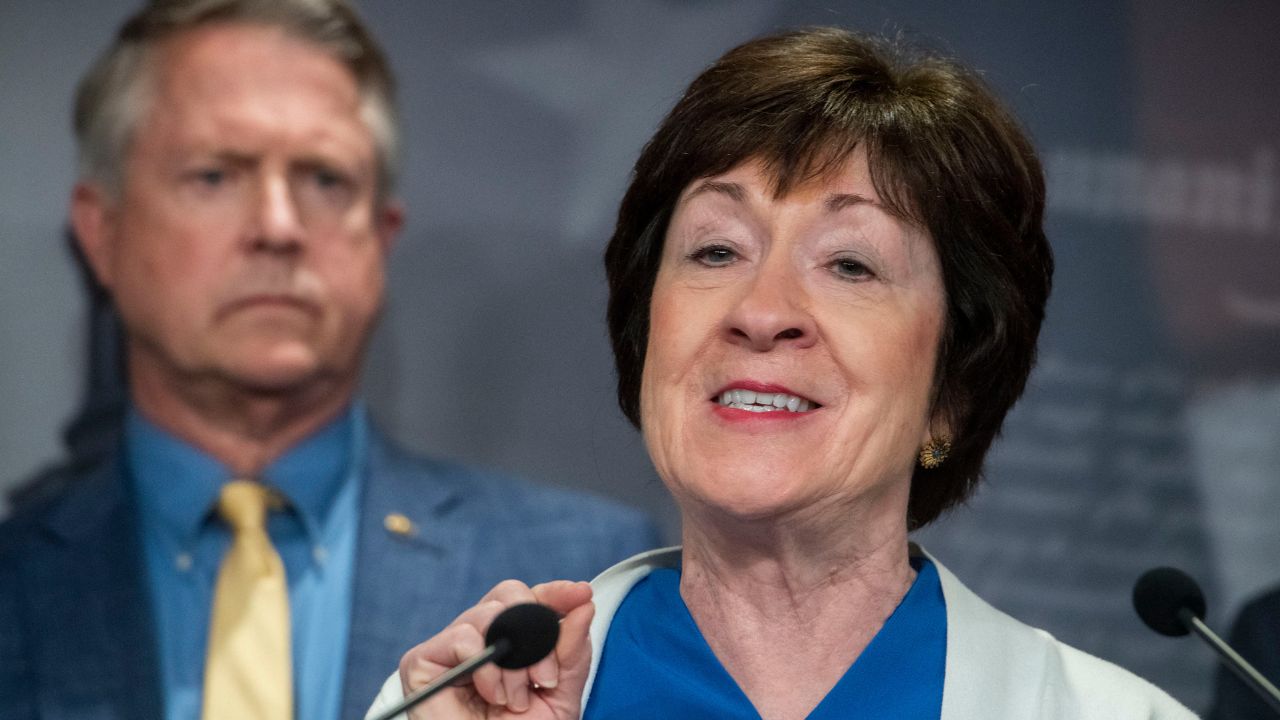
Collins enters what many observers consider her toughest reelection campaign yet. Maine voted for former Vice President Kamala Harris by roughly seven percentage points in the 2024 presidential election, and Democrats believe President Donald Trump’s declining national approval ratings have created a favorable political environment. Although Collins has repeatedly survived difficult races by cultivating a moderate image and strong personal following, Democrats see 2026 as their strongest opportunity in years to unseat her.
Jackson became the Democratic nominee after Platner withdrew following sexual abuse allegations, which he has denied. At a July convention, Jackson secured the delegates needed to replace him on the ballot after previously earning national attention as a progressive backed by Sen. Bernie Sanders during the state’s gubernatorial primary.
Troy Jackson’s strengths and challenges

Political analysts expect the race to remain highly competitive, as both the Cook Political Report and Sabato’s Crystal Ball currently rate the Maine Senate race as a toss-up.
University of Maine political science professor Mark Brewer told Newsweek that the contest would be “very competitive,” describing Jackson as a “solid candidate” with a realistic chance of defeating Collins despite her long electoral record. “Jackson wants to make this a national race about the economy, Trump, the Iran war, etc. Collins wants to make this a race about who has best delivered for Maine and who is best positioned to do so in the future,” Brewer said.
However, he also cautioned that Jackson remains relatively unknown to many voters. “I think the bigger issue is that Jackson is still relatively undefined for many voters. If Collins can shape that definition in a negative direction, that will not be good for Jackson,” he said.