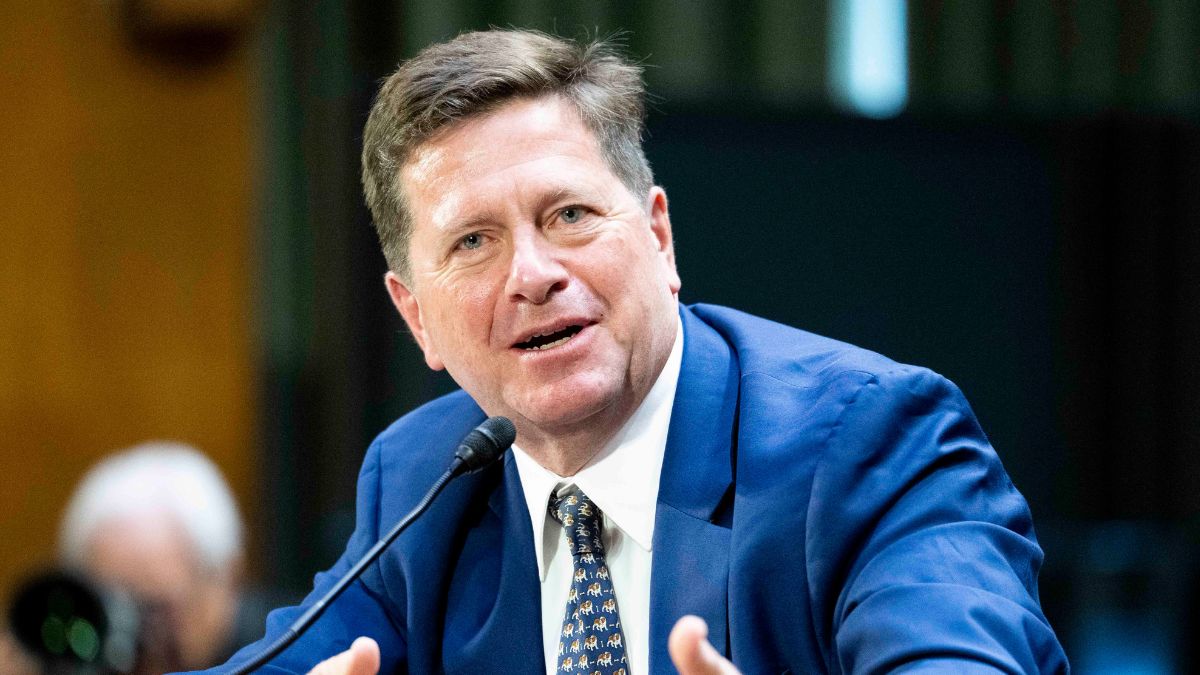
Jay Clayton, President Donald Trump‘s nominee for director of national intelligence (DNI), faced bipartisan criticism after repeatedly declining to say that former President Joe Biden won the 2020 election during a tense Senate Intelligence Committee confirmation hearing.
Georgia Sen. Jon Ossoff repeatedly pressed Clayton on the issue, arguing that someone seeking to lead the U.S. intelligence community had an obligation to answer a straightforward factual question honestly. Clayton rejected Ossoff’s characterization.
Ossoff then asked whether it was humiliating to be unable to answer the question and “have to indulge the president’s delusions,” adding that everyone in the room knew the truthful answer.
Independent Sen. Angus King of Maine, who caucuses with Democrats, also challenged Clayton.
Clayton insisted he had answered the question about the 2020 election multiple times, but King disagreed.
Asked separately about election integrity, Clayton said the government’s systems for collecting and verifying election data needed significant improvement and that audit trails in some jurisdictions fell short of expectations.
When King asked whether the U.S. had a voter fraud problem, Clayton said he did not believe that could be determined definitively until stronger processes were in place, though he added he wanted Americans to have confidence in election integrity.
Most committee members accepted Clayton’s standard response — that Biden received the most Electoral College votes and that the election was constitutionally certified — but Ossoff continued pressing him.
At one point Clayton said, “Like I said, I’m not, I’m not going to get into that with you,” prompting Ossoff to again argue he had an obligation to be honest with the committee and answer who won the 2020 election.
Warner signals broken trust
Vice Chairman Mark Warner, a Virginia Democrat who has worked closely with Clayton and previously defended his qualifications, said he was “bitterly disappointed” by the exchange.
By the hearing’s conclusion, Warner appeared unlikely to support the nomination, while other Democrats openly opposed Clayton after his repeated refusals to answer questions about the 2020 election.
Why the hearing matters beyond the 2020 question

The nomination carries broader significance because it is tied to efforts to reauthorize Section 702 of the Foreign Intelligence Surveillance Act, which expired more than a month before the hearing after Democrats declined to renew it while Trump ally Bill Pulte served as acting DNI.
Although surveillance authority loomed over the nomination hearing focused largely on elections, staffing at the Office of the Director of National Intelligence and subpoenas issued to journalists.
The DNI position oversees 18 intelligence agencies and grants access to the nation’s most sensitive intelligence. The office has drawn scrutiny since Trump appointed Pulte, who also leads the Federal Housing Finance Agency, as acting DNI despite bipartisan concerns over his role and actions while leading the housing agency.
Trump derailed the original hearing in June
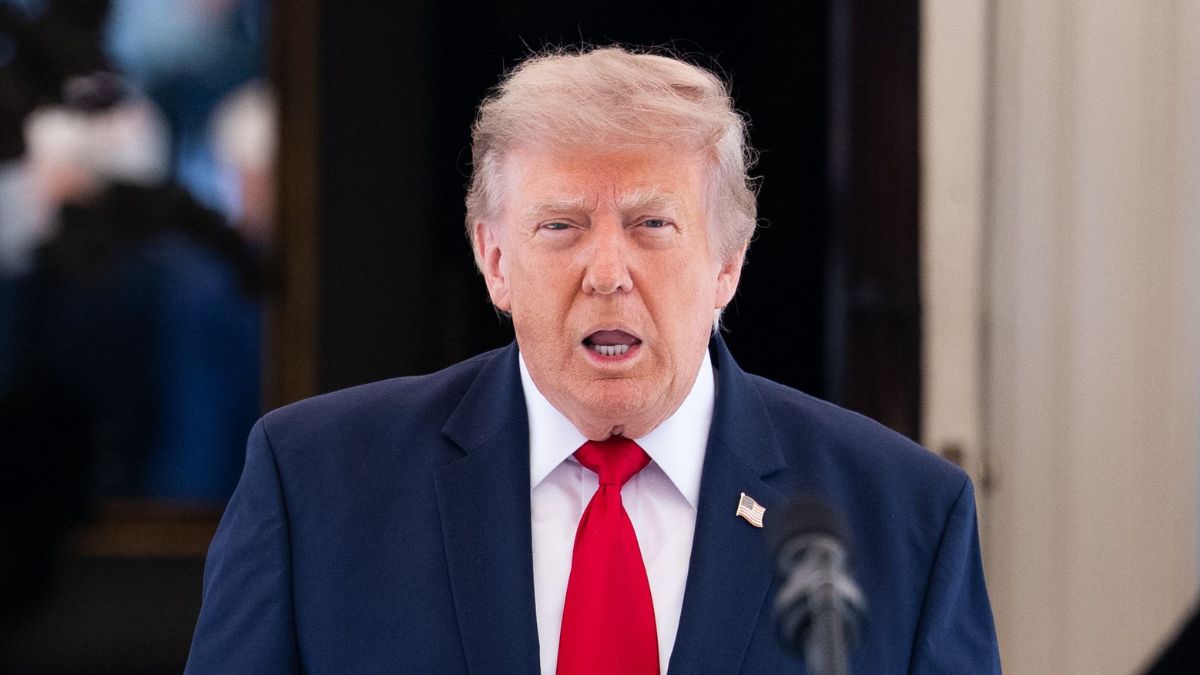
Clayton’s hearing came more than a month after Trump unexpectedly postponed an earlier confirmation hearing.
On the morning of the scheduled June hearing, Trump instructed Clayton not to appear, prompting Senate Intelligence Committee Chairman Tom Cotton to call it “regrettable that the president has directed Jay Clayton not to appear at his confirmation hearing.”
Trump later said he delayed the nomination partly to pressure Congress to combine a proposed election bill requiring voter identification and proof of citizenship with legislation renewing Section 702.
He also said he wanted to pressure the Senate into confirming Jamie McDonald as U.S. attorney for the Southern District of New York, a position that would become vacant if Clayton became DNI.
Trump formally renominated Clayton on June 11, hours before Section 702 expired. Pulte has served as acting DNI since June 19.
Committee vote expected next week
The Senate Intelligence Committee is expected to vote on Clayton’s nomination next week before sending it to the full Senate if approved.
Republicans can confirm Clayton without Democratic support but cannot afford defections in committee or more than three on the Senate floor.
Cotton said he expects the committee to vote early next week.
Republican senators largely focused on other issues during the hearing.
Sen. Susan Collins of Maine, one of the architects of the law creating the ODNI, said the office had grown beyond its original vision but remained essential for overseeing the nation’s intelligence agencies. She said she was “deeply disturbed” by calls to weaken or eliminate the office. Clayton replied that he supports keeping the ODNI intact.
Ossoff also pressed Clayton on Gabbard’s role in Georgia raid
Ossoff also questioned Clayton about outgoing DNI Tulsi Gabbard‘s role in FBI raids on election offices in Fulton County, Georgia.
He noted that the committee is actively “probing” Gabbard’s involvement after she traveled to Atlanta to oversee searches related to the 2020 election.
Wyden raises ‘New York Times’ subpoenas
Sen. Ron Wyden of Oregon questioned Clayton over subpoenas issued to three The New York Times reporters after they reported that Qatar’s donated Air Force One lacked several security features the administration had publicly claimed it possessed.
Clayton currently leads the U.S. Attorney’s Office for the Southern District of New York. Before entering government, he worked at Sullivan & Cromwell, which represents Trump in appeals involving his criminal conviction over payments to Stormy Daniels and a civil fraud judgment brought by New York Attorney General Letitia James.
Trump’s primetime address looms over the hearing
The hearing took place two days before Trump’s scheduled primetime address on elections, where he was expected to revisit claims about the 2020 election while urging Republicans to support stricter federal voting laws before the November midterms.
Reports indicated Trump planned to discuss voting machines, alleged election fraud and declassified intelligence related to foreign interference.
Election experts have criticized such rhetoric as an effort to pressure election officials and lay the groundwork for contesting unfavorable election results. They also noted that federal courts have already blocked key provisions of two previous Trump executive orders on elections, ruling that the Constitution assigns election rulemaking to states and Congress.
Maryland Gov. Wes Moore, campaigning in Georgia for Democratic Senate candidate Jon Ossoff and gubernatorial candidate Keisha Lance Bottoms, said voters were tired of relitigating an election “that happened six years ago with an answer everyone already knows,” adding that Trump continued raising the issue because he could not accept losing.