
President Donald Trump‘s standing with the international public has fallen below both former President Joe Biden and Chinese President Xi Jinping, according to the Pew Research Center’s 2026 Global Attitudes Survey.
Just 21 percent of respondents said they have confidence in Trump to do the right thing regarding world affairs. That is 16 percentage points below Biden’s 2024 rating of 37 percent and lower than Xi’s 19 percent rating during the same period.
The survey also marks the first time in roughly two decades of Pew polling that China has been viewed more favorably than the United States.
Laura Silver, associate director of Pew’s Global Attitudes Research and a co-author of the study, said views of Washington and Beijing have been comparable at times but had never previously tilted significantly in China’s favor.
Context behind the shift
The findings reflect a broader trend in perceptions of U.S. and Chinese leadership.
During the latter years of Biden’s presidency, confidence in him generally exceeded confidence in Xi across most countries surveyed, although Biden’s ratings declined between 2023 and 2024. During Trump’s second term, confidence in the U.S. president fell sharply while views of Xi improved, despite overall confidence in the Chinese leader remaining relatively low.
The survey was conducted among 42,151 respondents across 35 countries, the West Bank and East Jerusalem.
Silver said international views of the United States deteriorated after Trump launched military operations against Iran, linking the conflict to declining perceptions that the U.S. contributes to global peace and stability.
She added that China has benefited from being viewed as a more “reliable partner,” helped in part by improving perceptions following its post-pandemic recovery.
China preferred over the U.S. in most countries

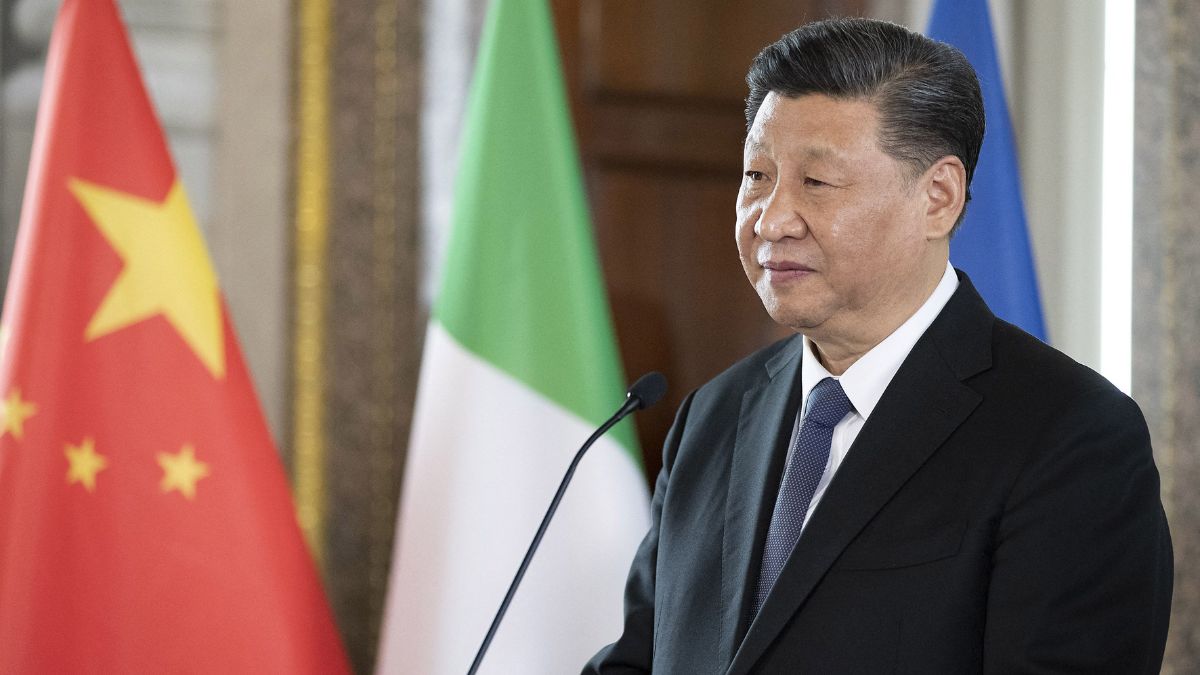
China received more favorable ratings than the United States in 25 of the 36 countries and territories surveyed, including Canada and Mexico. The trend was especially pronounced across the Asia-Pacific region and the Middle East.
The United States ranked higher in only six countries: Poland, the Philippines, South Korea, India, Japan and Israel. Views were roughly even in the remaining five.
The findings represent a notable reversal after years in which the United States generally enjoyed a stronger global image than China.
Axios said the shift reflects declining perceptions of the U.S. as Trump advances his “America First” agenda while China’s international image has improved.
Confidence in leaders diverges sharply
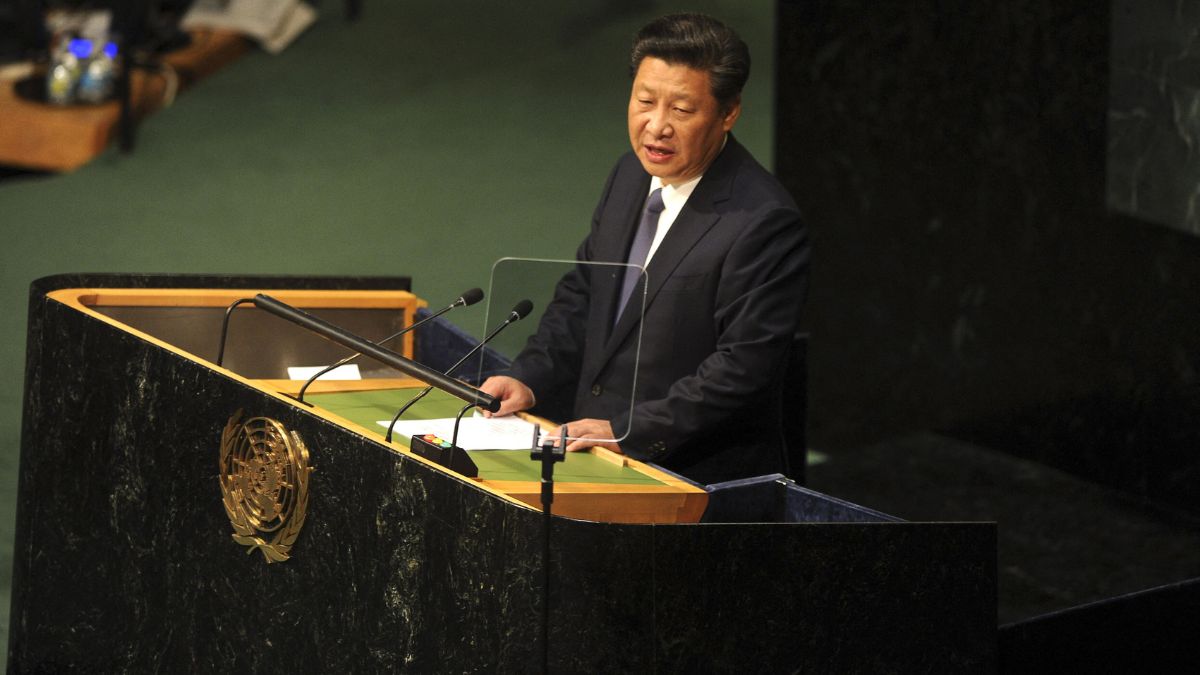
Respondents in 22 of the 36 countries and territories expressed greater confidence in Xi than in Trump, including those in Canada, Mexico, France, Germany and the United Kingdom.
Although confidence in both leaders remained relatively low overall, the United States outperformed China on one measure: respect for personal freedoms.
The report noted that Xi leads Trump by double-digit margins in Germany, Greece, Italy, the Netherlands, Spain, Sweden and the United Kingdom, despite Xi’s own favorability remaining modest.
Results varied elsewhere. In Mexico, 35 percent expressed confidence in Xi compared with 11 percent for Trump. In Colombia, Trump received higher confidence ratings than Xi.
Even in the six countries where the United States maintained an advantage, neither leader earned majority support.
Personal freedoms remain a U.S. advantage
Overall, 39 percent of respondents said the United States respects personal freedoms, compared with 26 percent who said the same of China.
However, Pew found that confidence in the U.S. on this measure has declined across nearly every country surveyed since 2021.
Only 11 of the 37 countries surveyed said around half or more believed China respects the personal freedoms of its citizens. In North America, most European countries, Japan, South Korea and Australia, roughly three-quarters or more said China does not.
Statement from Pew researchers
“Some of the views that we see of the U.S. are at or near historic lows,” Laura Silver, Pew’s associate director and co-author of the report, said.
The report also found that while neither Trump nor Xi enjoys majority support in several European countries, Xi is generally viewed more favorably than Trump.