President Donald Trump suggested that pipelines in Texas and Alaska could serve as alternatives to the Strait of Hormuz as tensions between the United States and Iran continue to escalate.
War with Iran
The comments came during an interview with Fox News Chief Foreign Correspondent Trey Yingst after the U.S. carried out a fourth consecutive day of strikes against Iran. U.S. officials have accused Tehran of violating a memorandum of understanding signed last month, while Iranian officials argue that Article 5 of the agreement gives Iran authority over passages through the strategic waterway.
The conflict has disrupted commercial shipping. Recently, Iran attacked several tankers, killing one crew member. The U.S. has since resumed a naval blockade of Iranian ships in the Gulf of Oman while continuing airstrikes against Iran.
Alternative to the Strait of Hormuz

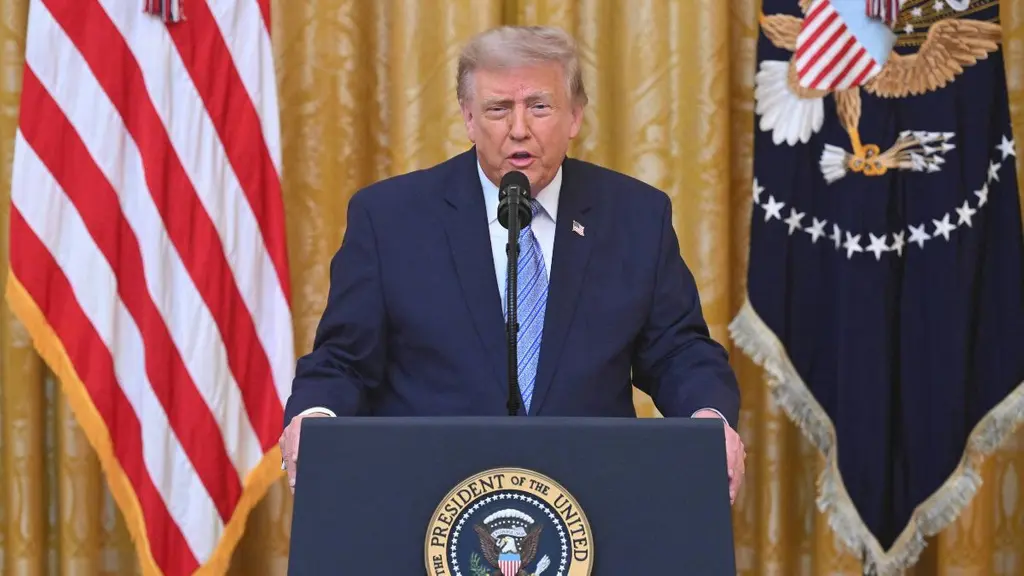
During the interview, Yingst challenged the Trump administration’s repeated assertion that the Strait of Hormuz remains open.
“Shipping data trackers indicate that just 10 vessels passed through the Strait of Hormuz on Monday — less than 10 percent of what normally goes through this critical waterway,” Yingst stated. “When you say the strait is open, what do you mean?”
“It’s open if people want to go through it,” the president said. “We’re not opening it for Iran. That’s the only one it’s closed for. It’s closed for Iran both in and out. But it’s open now. A lot of things have happened, Trey, in the last few months. Pipelines are being built. We’re coming up with great alternatives, including Texas, including Alaska.”
Zero explanation


Trump did not elaborate on how pipelines in Texas or Alaska would function as alternatives to the Strait of Hormuz, a key maritime route for global oil shipments.
Despite Trump’s remarks, the U.S. is not policing which vessels may transit the strait itself. Instead, the American naval blockade is being enforced farther east in the Gulf of Oman.