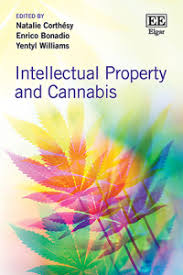








The regulation of cannabis has evolved dramatically over the last century. For much of that time, cannabis was primarily a concern for the criminal law. However, in concert with the moves in some jurisdictions towards decriminalization or legalization of medical and recreational uses of cannabis, the opportunity to commercialize marijuana and other cannabis products has prompted greater attention to intellectual property rights. Legal scholars and practitioners have been discussing this topic for well over a decade, with Intellectual Property and Cannabis as the latest addition to that literature. Edited by Natalie Corthésy, Enrico Bonadio and Yentyl Williams, the volume brings together contributions that run the gamut of IP rights, from patents and trade marks to copyright and geographical indications (GIs).
The first part of the book focuses on branding. Luke Sebastian Zimmerman reviews the challenges for the protection of cannabis-related trade marks in the USA, where the ‘lawful use’ requirement has been a major barrier to federal registration. The position has relaxed slightly for hemp in recent years, so the US Patent and Trademark Office requires any cannabis-related trade marks to restrict their goods and services to hemp that meets the definition in the 2018 Farm Bill, namely a THC concentration no higher than 0.3 per cent. The chapter highlights the importance of the efforts to reschedule cannabis under the Controlled Substances Act, which may expand the goods or services for which trade marks might be registered. Indeed, after the book was published, US President Trump issued an executive order in December 2025 to expedite the reclassification of cannabis from a Schedule I to a Schedule III drug.1 As Zimmerman explains, however, such a change would still fall short of resolving all the obstacles to federal trade mark registration.