










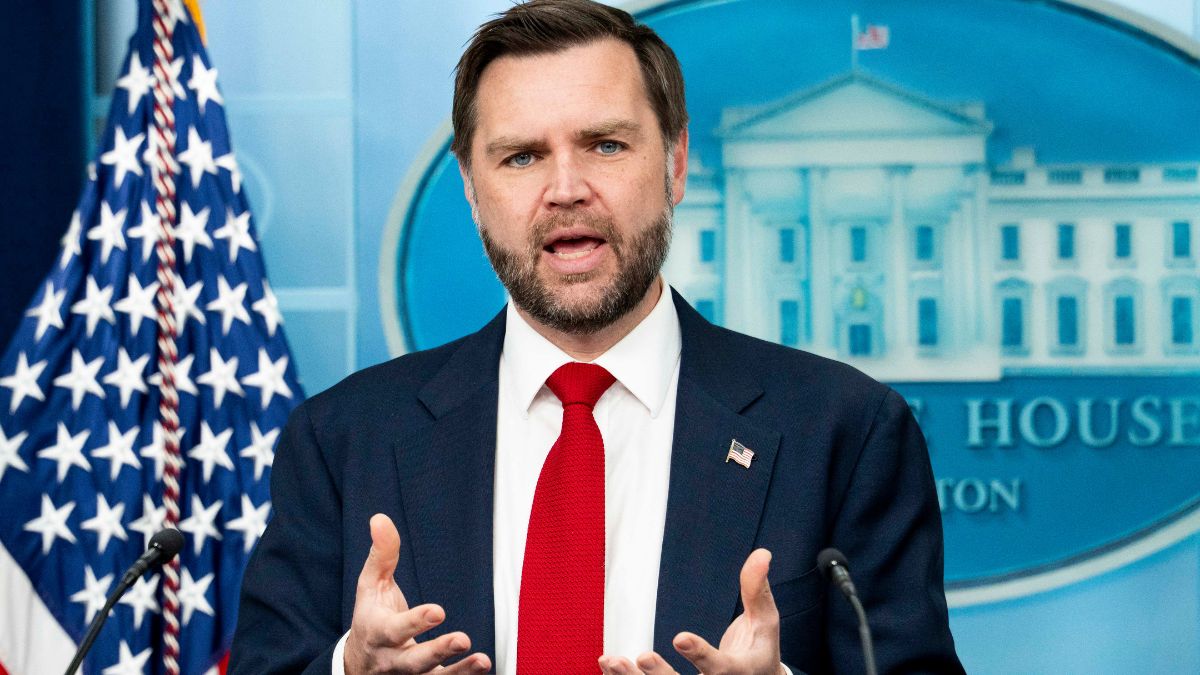
Vice President J.D. Vance holds a stronger net favorability rating than former Vice President Kamala Harris and Rep. Alexandria Ocasio-Cortez, D-N.Y., according to the Harvard CAPS/Harris Poll.
The survey, conducted July 11–12, 2026, among 1,776 registered voters, found Vance with a net favorability of -3 percent, based on 40 percent favorable and 43 percent unfavorable views. Harris posted a net rating of -7 percent (41 percent favorable, 48 percent unfavorable), while Ocasio-Cortez registered -6 percent (30 percent favorable, 36 percent unfavorable).
The monthly poll was conducted jointly by the Center for American Political Studies at Harvard University, The Harris Poll and HarrisX. It has a margin of error of plus or minus 2.3 percentage points.
How Vance stacks up against Democrats directly
Head-to-head polling has produced more mixed results.
A Zogby Analytics survey found Vance leading Ocasio-Cortez by 7.4 percentage points and California Gov. Gavin Newsom by 7 points in hypothetical general-election matchups.
By contrast, a June Public Sentiment Institute poll found Ocasio-Cortez leading Vance 48.4 percent to 39.6 percent, Newsom ahead 50.8 percent to 38.9 percent and Harris leading 49.4 percent to 38.3 percent in separate matchups.
Across multiple surveys, hypothetical Vance-versus-Democrat contests have varied considerably, with some showing narrow Democratic leads, others giving Vance an edge and roughly one in five voters remaining undecided.
Where other political figures landed
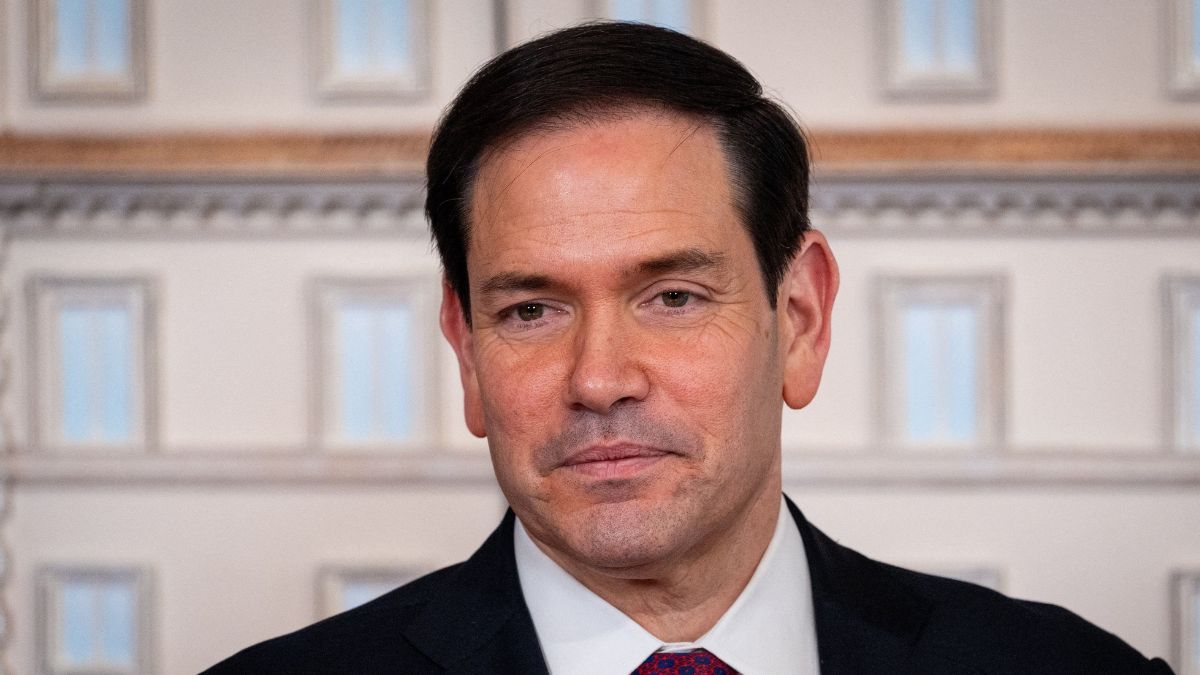
The Harvard CAPS/Harris Poll found that Robert F. Kennedy Jr. and Rubio were the only figures tested with positive net favorability ratings. Kennedy posted a net rating of 1 percent (41 percent favorable, 40 percent unfavorable), while Rubio also registered 1 percent (36 percent favorable, 35 percent unfavorable).
Newsom and Defense Secretary Pete Hegseth each recorded net favorability ratings of -8 percent. Trump posted a net rating of -13 percent, with 40 percent viewing him favorably and 53 percent unfavorably.
Among international leaders, Israeli Prime Minister Benjamin Netanyahu registered a net favorability of -15 percent. Russian President Vladimir Putin received the lowest rating in the survey at -54 percent, with 14 percent favorable and 67 percent unfavorable.
Analysts urge caution on early numbers
Political analysts caution that favorability ratings and early presidential polling conducted more than two years before an election primarily reflect name recognition and the current political environment rather than eventual voting behavior.
Vance’s own polling illustrates that volatility. His support as the preferred 2028 Republican nominee slipped five points in an April 2026 YouGov survey compared with January, but subsequent polls in June and July showed his support rebounding into a commanding lead within the GOP field.