









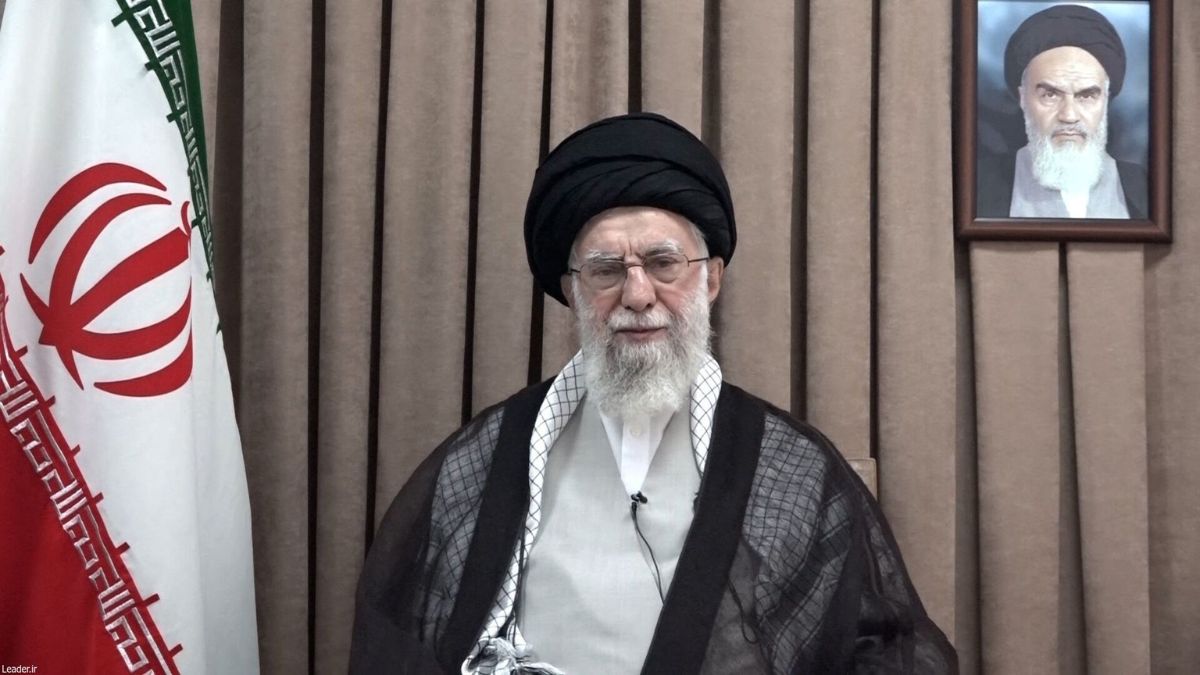
Iran‘s Supreme Leader Ayatollah Mojtaba Khamenei issued a written statement, declaring that revenge for the killing of his father, former Supreme Leader Ayatollah Ali Khamenei, “must certainly” occur.
The statement, released on Khamenei’s Telegram and X accounts days after his father’s burial, described avenging Ali Khamenei as “the demand of the nation” and marked Mojtaba Khamenei’s first public remarks since the funeral.
“This vengeance is the will of our nation and must inevitably be carried out,” Khamenei said in the statement, signed July 10. He added that carrying out revenge did not depend on any individual official, including himself.
Separately, remarks carried by Press TV and cited by Middle East Eye quoted Khamenei as saying “revenge is the will of our nation” while vowing to avenge his father’s “innocent blood.”
Funeral ceremonies and the new leader’s continued absence
Funeral ceremonies for Ali Khamenei began on July 3 and concluded with his burial on July 9 at the Imam Reza shrine in Mashhad.
Mojtaba Khamenei did not appear publicly during the ceremonies, according to JNS, which cited sources familiar with the funeral arrangements. Three of Ali Khamenei’s other sons — Mostafa, Masoud and Meysam Hosseini Khamenei — attended prayers over their father’s body at Tehran’s Imam Khomeini Mosalla mosque.
The New York Times, citing two members of Iran’s Islamic Revolutionary Guard Corps and a source involved in the funeral planning, reported that Mojtaba wanted to attend the burial and lead the traditional prayer but was prevented from doing so because security officials feared an Israeli assassination attempt.
According to the Times of Israel, Mojtaba Khamenei suffered severe injuries, including facial disfigurement and damaged limbs, in the February 28 strike that killed his father, mother and wife. Since then, he has communicated only through written statements.
The funeral drew large crowds across Iran. At Tehran’s Grand Mosalla, mourners chanted “Our word is one! Revenge! Revenge!” as Ali Khamenei’s body lay beneath a glass enclosure, according to the Associated Press.
During a July 6 procession that CNN reported stretched roughly 12 miles and drew hundreds of thousands of mourners, participants threw pebbles at an image of President Donald Trump in a ritual modeled on the Islamic “stoning of the devil” tradition, according to footage released by Iran’s Mizan news agency.
Security was breached during the mourning period when two members of Iran’s Basij paramilitary force were killed in an attack in Mashhad, according to Iran’s Tasnim news agency, as cited by France 24.
Trump’s warning against any assassination attempt
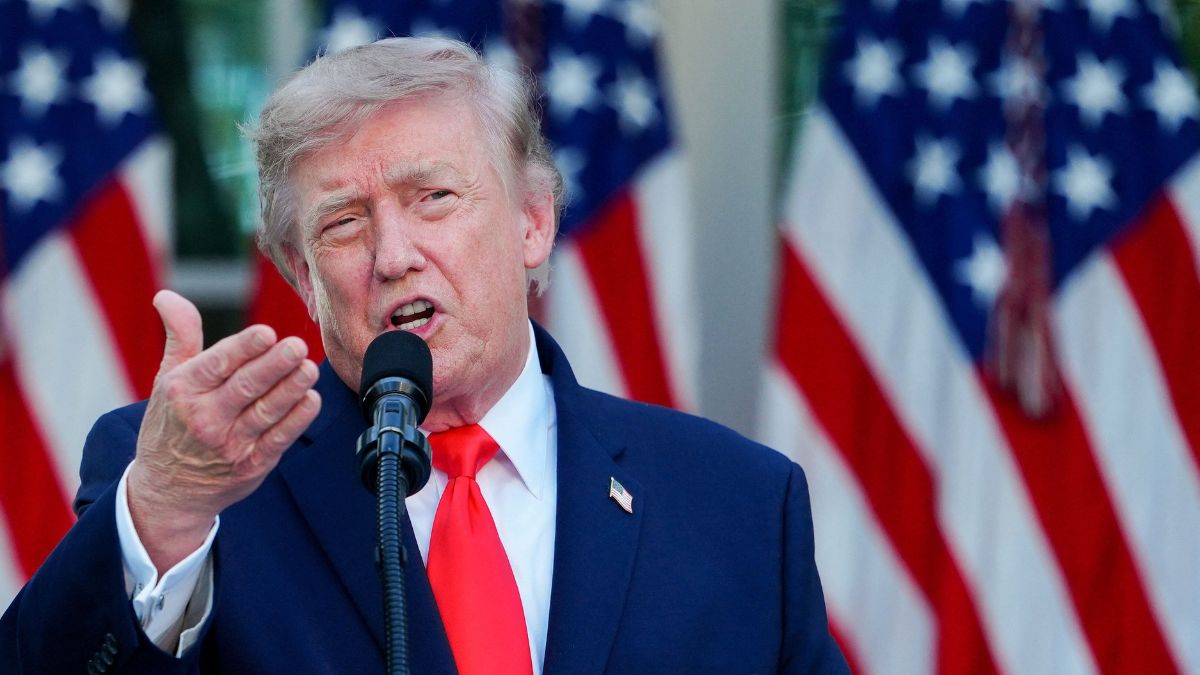
Trump has repeatedly warned Iran against any assassination attempt.
He said orders had “already been given” and that the U.S. military was “ready, willing and able” to wage a year-long campaign to “completely decimate and destroy all areas of Iran” if such an attack succeeded.
His comments followed a Wall Street Journal report citing people familiar with the matter that Israel had shared intelligence with Washington regarding Iranian discussions about killing the American president.
Two U.S. officials later told Israel‘s Channel 12 that the intelligence reflected internal Iranian discussions rather than a specific operational plot, according to the Times of Israel.
Ceasefire diplomacy and its repeated collapse
The first pause in fighting came through a temporary ceasefire following talks in Islamabad between Vice President J.D. Vance and Iranian parliamentary speaker Mohammad Bagher Ghalibaf.
Those discussions led to the June 17 Islamabad Memorandum, a 14-point agreement negotiated with Pakistani mediation. The deal called for an end to military strikes, toll-free commercial shipping through the Strait of Hormuz for 60 days and the lifting of the U.S. naval blockade of Iranian ports.
Mojtaba Khamenei endorsed the agreement despite reservations expressed in a written statement, according to Al Jazeera.
The ceasefire later unraveled after the U.S. carried out a second consecutive night of retaliatory strikes on Iran. Trump declared the truce “over” during the NATO summit and described Iranian officials as “scum” and “sick people.”
The U.S. said the strikes were triggered by Iranian attacks on commercial tankers in the Strait of Hormuz, which Washington described as ceasefire violations.
American forces reportedly struck about 90 targets across Iran, including an area near the Bushehr nuclear power plant. According to Bushehr’s deputy governor, a U.S. projectile hit a fishing pier and set several boats on fire.
U.S. Central Command announced another round of strikes beginning at 5 p.m. EDT, saying the operation was intended to reduce Iran’s ability to “attack civilian mariners and commercial ships freely transiting the Strait of Hormuz.”
Iranian Parliamentary Speaker Mohammad Bagher Ghalibaf rejected that justification, writing that “Hormuz will only open with Iranian arrangements, not American threats.”
Iran’s ambassador to the United Nations also warned that continued U.S. violations of the Islamabad Memorandum could lead Tehran to consider itself no longer bound by the agreement, according to IRIB.
Diplomatic efforts continue alongside the fighting
Despite renewed fighting, diplomatic efforts remain underway.
A source familiar with the talks told Reuters that Qatari mediators traveled to Iran in coordination with the United States to seek a reduction in tensions.
The central dispute remains control of the Strait of Hormuz. Iran insists it should retain authority over passage through the waterway, while U.S. officials argue the Islamabad Memorandum requires Tehran to fully reopen the strait before the agreement’s 60-day deadline.