








Germany’s surging demand for medical cannabis is transforming the international marijuana industry. For years, Canada has enjoyed a comfortable position as the world’s largest cannabis exporter, feeding a steadily growing German import market. But shifting regulations in Europe, rising competition from lower-cost producers, and a push toward locally grown, pharmaceutical-grade supply are threatening that dominance. The result is a global cannabis trade map that is being redrawn in real time, with major implications for producers, investors, and patients alike.
Germany Remains the World’s Largest Medical Cannabis Importer
Germany continues to lead the world in medical cannabis imports, and the numbers keep climbing. According to figures from the country’s Federal Institute for Drugs and Medical Devices (BfArM), Germany brought in a record volume of medical cannabis last year, and the momentum has not slowed. In the first quarter of 2026 alone, roughly 67,000 kilograms of cannabis entered the country, putting Germany on pace for yet another record-breaking year.
Canada has been the biggest beneficiary of this boom. Nearly half of all cannabis imported into Germany in 2025 originated from Canadian licensed producers, with Portugal a distant second at around 55,000 kilograms. This Canada-to-Germany pipeline has been the backbone of the global cannabis trade — but cracks are beginning to show.
Why Canada’s Export Dominance Is Under Threat
Canada exported roughly 276 metric tons of medical cannabis flower in 2025, worth approximately C$643 million when extracts are included. That is an impressive figure, but industry analysts warn that the foundations of Canada’s lead are eroding.
Two forces are at work. First, as more countries qualify to export into Europe, wholesale prices are compressing, which shrinks the cost advantage Canadian producers have long relied upon. Second, and perhaps more consequentially, European regulators are increasingly scrutinizing how and where cannabis is processed. Canada’s export model has traditionally involved cultivating cannabis under agricultural standards at home, with pharmaceutical-grade processing completed after arrival in Europe. German authorities are now questioning whether that approach satisfies European Union Good Manufacturing Practice (EU-GMP) requirements.
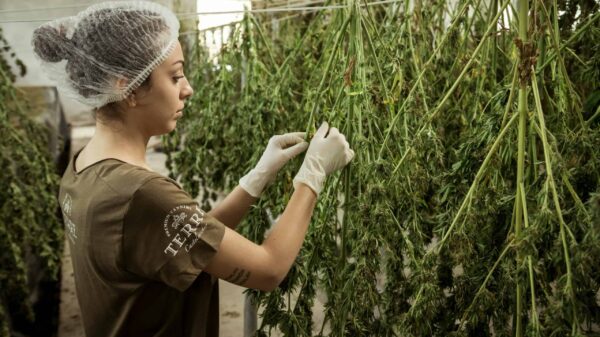
In June 2026, health authorities in the German state of Hesse issued guidance classifying drying as a critical manufacturing step and recommending that GMP-compliant processing — including drying and trimming — generally take place in the country where the cannabis is harvested. While this is not yet an EU-wide rule, it signals a regulatory direction that could disqualify significant portions of Canadian-compliant production from the German market. If GMP obligations shift upstream to the point of cultivation, the entire global sourcing map could change, and producers that treated cannabis primarily as an agricultural commodity would be the most exposed.
North American Companies Are Investing Directly in Europe
Rather than relying solely on exports, major North American cannabis companies are responding by building or buying production capacity inside Europe. US multistate operator Curaleaf Holdings completed its buyout of German firm Four 20 Pharma earlier in 2026, gaining an EU-GMP cultivation facility in Paderborn that employs around 110 people.
Canadian licensed producers are following the same playbook. Aurora Cannabis has made two acquisitions in the United Kingdom and invested about CDN$6 million in its facility in Leuna, Germany. Tilray Brands received a new cannabis cultivation license in Germany and launched German-grown products, including its ARX brand, in mid-2026. Meanwhile, homegrown German company DEMECAN announced a multimillion-euro investment to double its annual production capacity to four tons, underscoring that domestic producers intend to compete for a larger share of their own market.
New Exporters Are Rising: Portugal, Thailand, and South Africa
The competitive field is widening quickly. Portugal has emerged as one of Europe’s leading cannabis processing and export hubs, shipping more than 66,000 kilograms of medical cannabis in just the first half of 2026 — over 80% of its entire 2025 output. Denmark and South Africa round out the list of top exporters, and lower-cost producers in Latin America are expected to capture additional market share in the years ahead.
Australia, the world’s second-largest medical cannabis importer behind Germany, illustrates how quickly supply chains can shift. Australian cannabis imports grew from roughly 7,300 kilograms in 2021 to more than 81,000 kilograms in 2025. Yet Canadian producers saw their share of that market decline sharply, largely because imports from Thailand jumped from about 1,100 kilograms to more than 20,600 kilograms over the same period. The lesson is clear: dominance in cannabis exports can evaporate quickly when cheaper, compliant alternatives emerge.
What the Future Holds for the Global Medical Cannabis Market
Despite the turbulence, Germany is expected to remain the world’s largest medical cannabis import market for the foreseeable future, even as more countries legalize medical programs. Industry observers anticipate growing intra-European trade as Danish and Portuguese production scales up to meet European pharmaceutical standards, allowing the continent to source increasingly from within its own regulatory bloc.
For producers, the message is that the era of easy export dominance is ending. Compliance costs are rising, wholesale prices are compressing, and regional supply chains are hardening. The companies best positioned to thrive will be those that invest in genuine end-to-end pharmaceutical quality and establish production close to their end markets. Canada may hold its lead in the near term thanks to its volume, infrastructure, and reliability, but defending that position over the next several years will require far more than the cost and logistics advantages that built it.
The global medical cannabis trade is entering a new phase defined by regulatory rigor and regional supply chains. Germany’s insatiable demand created the modern export market, but the same market is now demanding locally processed, EU-GMP-compliant products. Canadian producers, US multistate operators, and emerging exporters from Portugal to Thailand are all racing to adapt. For anyone watching the cannabis industry, the next three years will determine which countries — and which companies — control the future of global medical marijuana supply.