
Democrats are entering the final 75-day stretch ahead of the 2026 midterm elections with a more realistic path to reclaiming the Senate, as competitive races emerge across states that President Donald Trump carried in 2024. Republicans currently control the Senate 53-47, leaving Democrats with little room for error as they must defend every seat they hold, win their two leading pickup opportunities in Maine and North Carolina and then capture at least two additional Republican-held seats. Recent polling in Alaska, Iowa, Ohio and Texas suggests that the Senate map might be expanding beyond the traditional battleground states, while Trump’s declining approval ratings and voter frustration over inflation, gas prices, tariffs and the cost of living could tip the scales in Democrats’ favor.
Democrats face a narrow but increasingly viable path to the Senate
The Senate map remains considerably harder for Democrats than the House map because Republicans start with a six-seat advantage. Democrats must protect vulnerable incumbents in Georgia and Michigan while attempting to defeat Republicans in Maine and North Carolina. In addition, they have to find two more victories among states Trump won comfortably in the 2024 presidential race.
According to reports, Maine is the clearest Democratic pickup opportunity. Republican Sen. Susan Collins is facing Democratic nominee Troy Jackson after progressive candidate Graham Platner withdrew following sexual assault allegations, which he has denied. Notably, recent surveys show Jackson narrowly ahead. Fox News found him leading Collins 48%-46%, Hart Research Associates had him ahead 49%-45% and the University of New Hampshire polling found Jackson at a 49%-46% advantage. The Cook Political Report rated the race a toss-up.
North Carolina also offers Democrats an opening. Former Gov. Roy Cooper leads Republican Michael Whatley by 52%-39% in a Carolina Journal/Harper Polling survey, 52%-42% in an Elon University poll and 50%-43% in a The New York Times/Siena survey. Cook rated the contest “lean” Democratic.
Alaska and Iowa challenge Republican strongholds

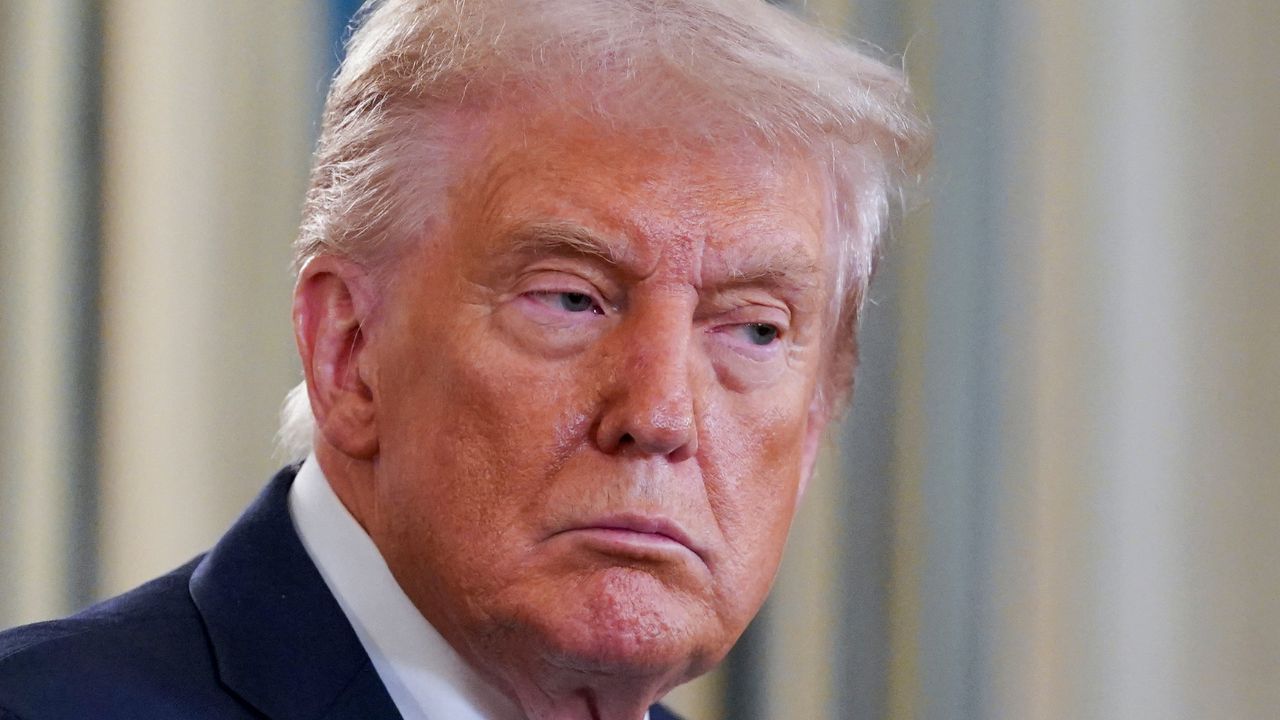
Alaska is one of the most striking examples of the changing map. Trump won the state by 13 points in 2024, but former Rep. Mary Peltola has made the race competitive against Republican Sen. Dan Sullivan. Shawn Donahue, a political science professor at the University at Buffalo, described Peltola as “the only Democrat that could have put the seat in play.”
An Alaska Survey Research poll conducted August 2-5 among 1,371 likely voters showed Peltola ahead 51%-49%, with a margin of error of plus or minus 3 points. Data for Progress, surveying 578 likely voters from July 28-August 4, put her ahead 53%-47%, with a plus or minus 4-point margin. A The New York Times/Siena poll, however, showed Sullivan leading 47%-45% among 593 likely voters surveyed June 15-29, with a plus or minus 4.9-point margin. Cook classifies the race as a toss-up.
Iowa is similarly competitive despite Trump winning it by 13 points in 2024. Republican Rep. Ashley Hinson leads Democrat Josh Turek 47.5%-45% in an Emerson poll conducted August 2-4, while a The New York Times/Siena survey had Hinson ahead 48%-46%. A Fox News poll instead gave Turek a 50%-46% lead. Cook moved the race to a toss-up.
Commenting on the changing political landscape in Iowa, Donahue said, “The tariffs and diesel fuel prices are really hitting Iowa. … Iowa is a very agriculture dependent state, and a lot of the farmers have lost some of their markets.”
Georgia and Michigan could decide the balance
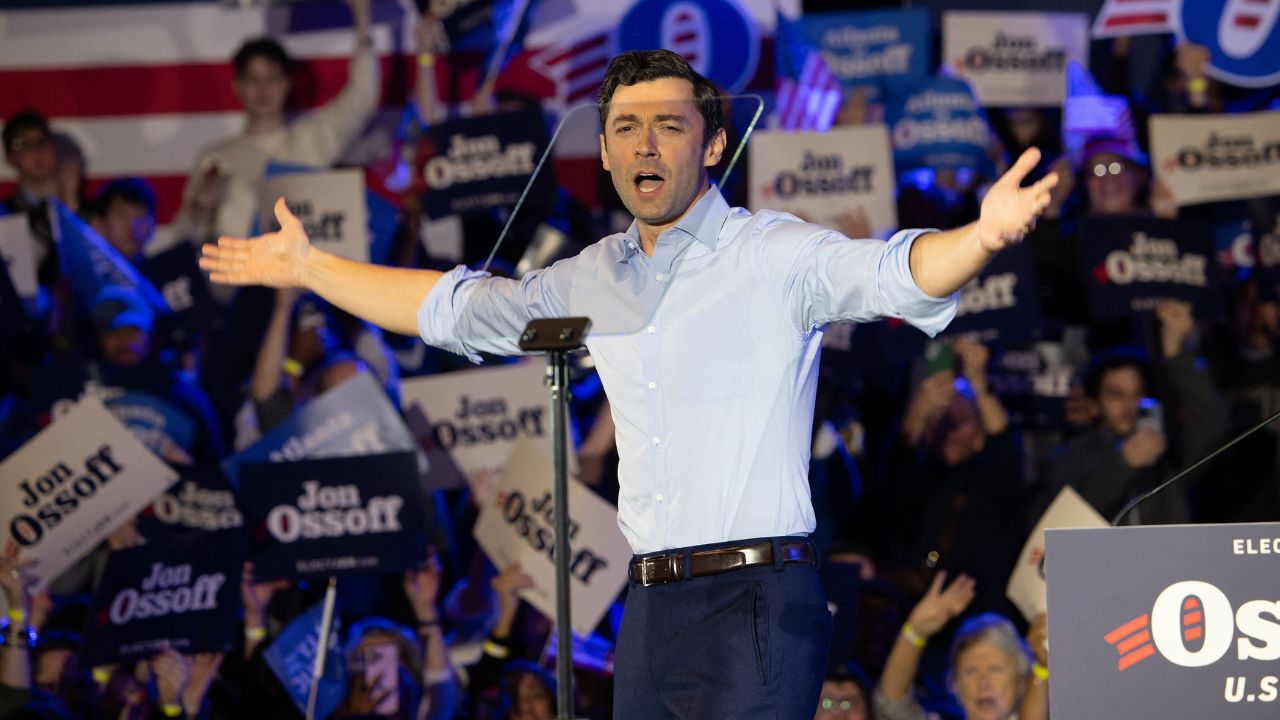
Democrats must also protect seats in Georgia and Michigan, two states Trump won narrowly in 2024 after Joe Biden carried them in 2020. In Georgia, incumbent Sen. Jon Ossoff has built a notable lead against Republican Rep. Mike Collins. An InsiderAdvantage survey of 800 likely voters conducted August 16-17 with a plus or minus 3.46-point margin of error showed Ossoff ahead 50%-43%, with 7% undecided.
An AARP poll conducted July 13-16 also found Ossoff ahead 52%-43%, while a Wick survey had him leading 46.7%-42.9%. A Fox News survey gave Ossoff a larger 56%-43% advantage. Cook rates the race “lean” Democratic.
However, the race in Michigan is much tighter. Democrat Abdul El-Sayed leads Republican Mike Rogers 48%-47% in an AARP poll of 877 likely voters conducted August 9-11. A Susquehanna survey gave El-Sayed a 46%-39% lead, while Fox News showed Rogers ahead 51%-47%. Cook considers the race a toss-up.
Texas and Ohio could determine whether Democrats can flip the Senate
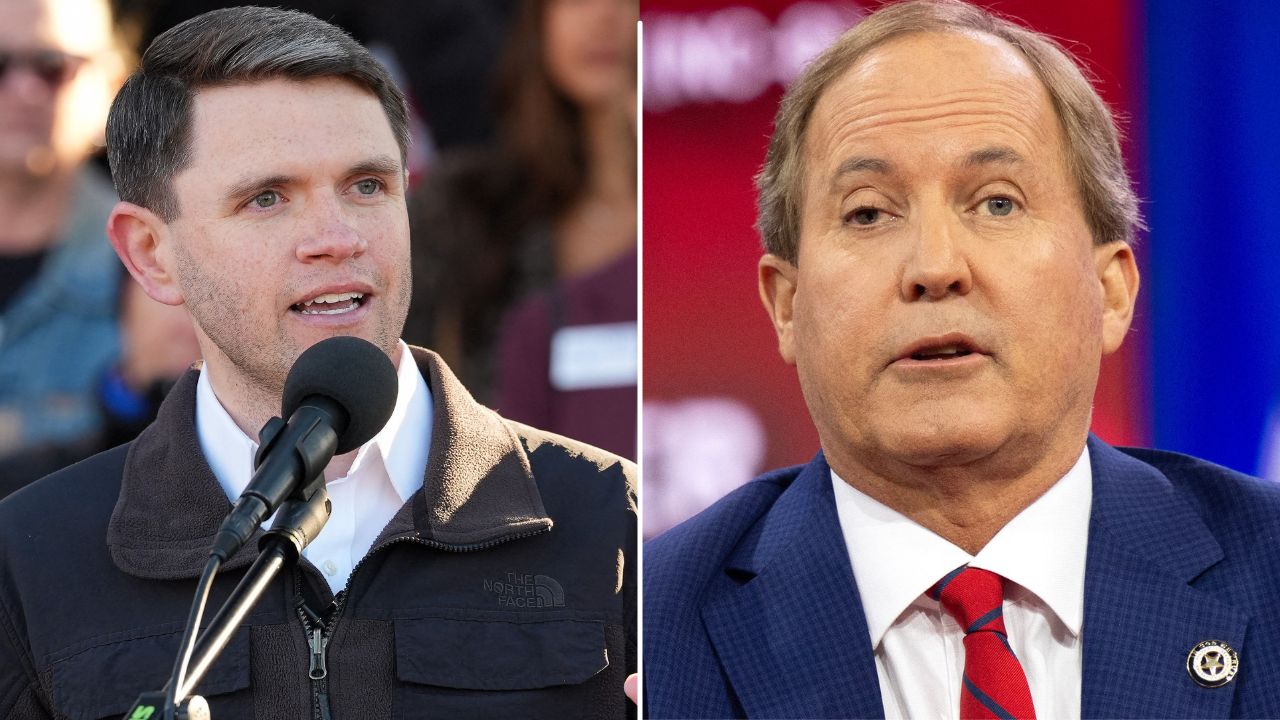
Despite the difficult political map and all signs pointing towards a tight race, Democrats seem to be increasingly optimistic in Ohio and Texas. In Ohio, Former Democratic Sen. Sherrod Brown led Republican Sen. Jon Husted 53%-45% in a Fox News poll, although a The New York Times/Siena survey gave Husted a 50%-47% advantage. Cook rates Ohio a toss-up.
The race in Texas, long considered a notable GOP stronghold, is even closer. While Republican Attorney General Ken Paxton led Democrat James Talarico 47%-46% in an Emerson poll, Texas Southern University’s survey showed Talarico ahead 47%-45%. A TexasPulse poll also put Talarico in a narrow lead, with a 47%-43% advantage. Cook moved the Texas race to a toss-up, marking a significant shift in the state’s political outlook.
Prediction markets’ favorability of Republicans takes a hit

The prediction market Kalshi gave Republicans a 53% chance of retaining the Senate, compared with 47% for Democrats, while Polymarket gave Democrats a 51% chance of winning a majority. At the beginning of 2026, Kalshi gave Republicans a 67% chance of holding the chamber.
Donahue said Democrats “absolutely” have a chance to flip the Senate in 2026. “If we would have had this discussion a year ago, the answer probably would have been not very likely,” he said. “I still think it’s a hard road for them to win control of the Senate, but it definitely seems like it’s doable now.”
On the other hand, Stephen Farnsworth, a political science professor at the University of Mary Washington, put the Democratic chances at “about 50/50.”
“The good news for Republicans is that the path to keeping their majority runs through states that President Trump won two years ago; the bad news is that polls show that Democratic voters are far more motivated than Republicans and that President Trump is particularly unpopular at the moment,” he explained.