American soldiers wounded during the U.S. conflict with Iran are accusing Defense Secretary Pete Hegseth and the Pentagon of minimizing the severity of their injuries after officials publicly characterized the vast majority of casualties as minor.
Pete Hegseth’s assessment is ‘unacceptable’
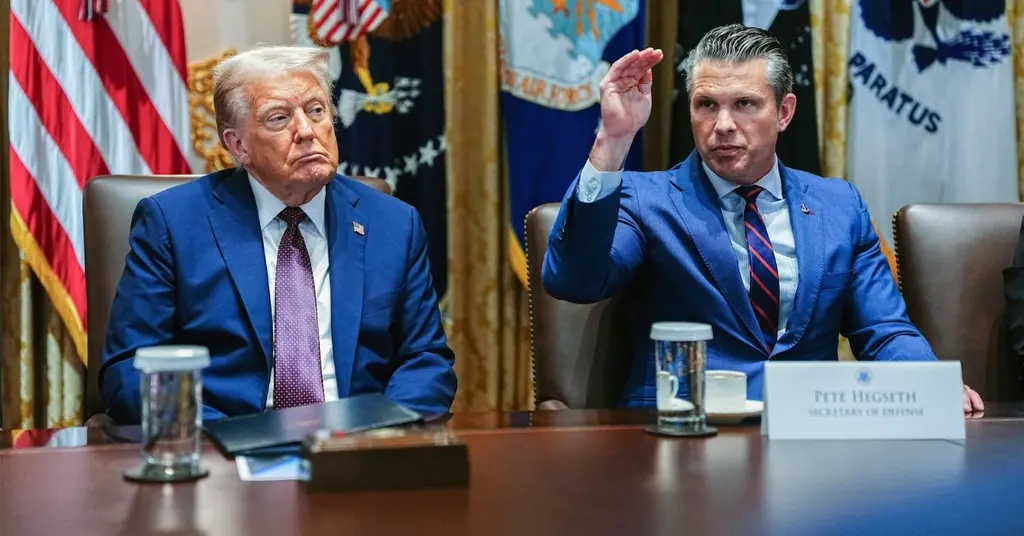
The controversy stems from remarks Hegseth made in March, when he told reporters that “almost 90 percent” of roughly 400 American service members injured during the conflict suffered only minor injuries and had already returned to duty. But several wounded soldiers and their families are now disputing that narrative, telling CBS News that their injuries were far more severe than military officials publicly acknowledged.
Among them is Chief Warrant Officer Rodney Bearman, who was critically wounded on March 1 when an Iranian drone slammed into his workstation at Port of Shuaiba in Kuwait during one of the deadliest attacks on U.S. troops in the conflict. Medical records reviewed by CBS News reportedly show Bearman suffered extensive shrapnel wounds, a concussion, hearing and vision loss and damage to his lungs. Despite the extent of those injuries, the Army classified him as “not seriously injured.”
“That assessment is unacceptable,” his wife told CBS News.
Injured soldiers speak out

Bearman, 57, was one of more than 20 American service members hurt in what has been described as the worst attack on U.S. forces since 2021. According to multiple survivors and their families, the military has failed to recognize the true severity of their combat injuries, leaving many confused about how casualty classifications are being determined.
Several injured troops said they were informed they had been “returned to duty.” However, some had been placed on active orders inside specialized soldier recovery units designed for extended medical rehabilitation. A Pentagon spokesperson later clarified to CBS News that soldiers assigned to recovery units are not counted as having returned to duty.
Sergeant First Class Cory Hicks, another survivor of the March 1 strike, said he also suffered severe shrapnel injuries and underwent multiple emergency surgeries in Kuwait. Hicks said Army officials initially downplayed the seriousness of his injuries when communicating with his family after the attack.
“They said, ‘Your husband was injured, he has a minor jaw injury and he’s going to be returned to duty,’” Hicks recalled.
Asked whether he believes military leaders intentionally softened the public narrative surrounding the attack, Hicks did not hesitate, replying, “Absolutely.”
Blatant damage control

The U.S. Army has strongly rejected accusations that military leaders attempted to obscure the extent of soldiers’ injuries.
“The care and wellbeing of our soldiers is of the highest priority,” an Army spokesperson said. “Any assertion that the Army seeks to downplay a soldier’s injuries is simply not true.”
Army officials said classifications such as “seriously injured” and “very seriously injured” are based on strict military definitions, with the designation typically reserved for service members at immediate risk of dying within 72 hours of sustaining their wounds.
Still, the dispute has raised new questions about whether Pentagon leadership under Hegseth publicly understated the human cost of the conflict with Iran while wounded soldiers continue facing long recoveries behind the scenes.