










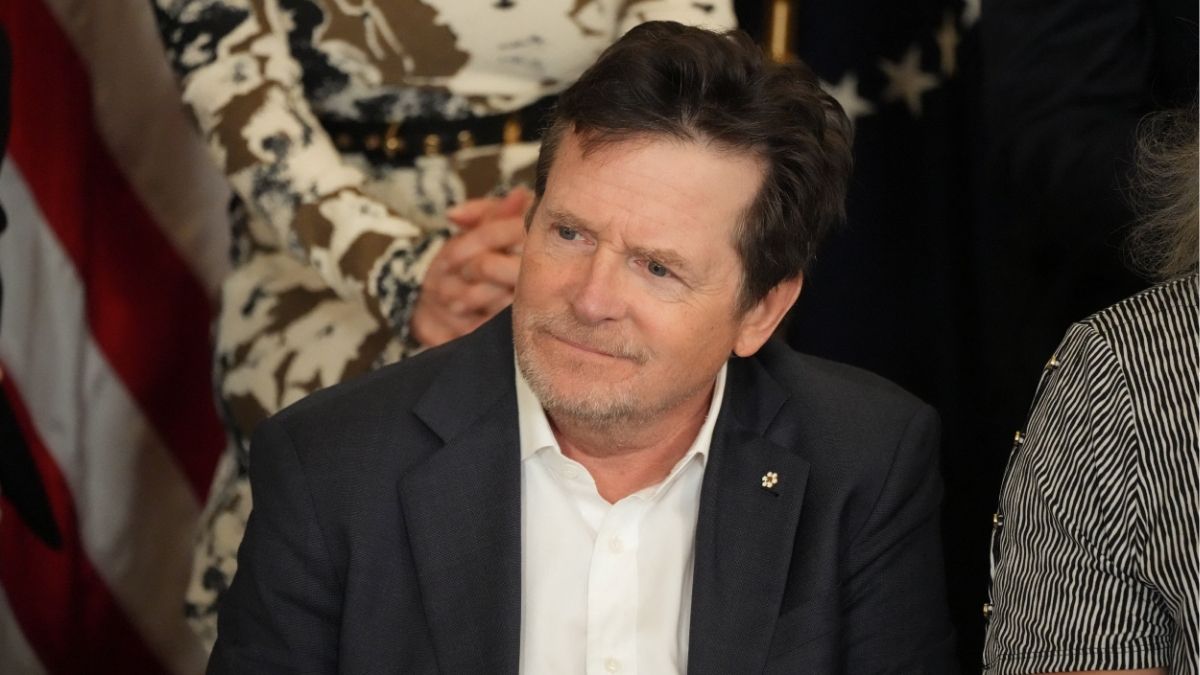
Michael J. Fox said returning to acting after a six-year retirement really gave him a renewed sense of purpose, despite his ongoing battle with Parkinson’s disease.
The 65-year-old actor told The Hollywood Reporter that he would return for a fourth season of Shrinking.
Fox, diagnosed with young-onset Parkinson’s in 1991, shared that he viewed acting as central to his well-being rather than something the disease had taken from him.
“It’s really prolonged my life and made my life interesting in a way that I didn’t think it would be to this point,” Fox stated, “I’m not retired from acting, but if I didn’t act again, it would be for a very good reason. I let Parkinson’s make decisions for me.”
The actor stepped away from acting during the COVID-19 pandemic after finding it increasingly difficult to rely on his speech day-to-day, a break he initially expected to be permanent.
He called the hiatus a moratorium that lasted six years before he eventually reached out to longtime friend and collaborator Bill Lawrence, the creator of Shrinking and Spin City, to return to work.
He is currently preparing to travel to California to begin shooting the new season.

Fox earned an Emmy nomination for his guest arc in season three of Shrinking, where he played a Parkinson’s patient who develops a bond with Harrison Ford‘s character.
He dubbed it a milestone role, marking the first time he played a character interacting with another character living with the disease. He praised Ford for bringing warmth and authenticity to their scenes together.

“He was happy that I was sharing my experience with him as a character and helping him do what he needed to do,” he said of Ford. “He was so loving. I didn’t know what to expect with Harrison because he’s famously a stoic, curmudgeonly guy — and he’s really a sweetheart. He was so affectionate to me and so welcoming to me.”
The Canadian actor was diagnosed with Parkinson’s at age 29, shortly after wrapping his run on Family Ties. He kept the diagnosis private for seven years while starring in Spin City, a period during which he also gave up alcohol, which he had used to cope with the condition.

After going public in 1998 with the support of his wife, Tracy Pollan, Fox testified before the U.S. Senate without taking his medication to show lawmakers the physical effects of Parkinson’s disease.
Fox acknowledged that becoming one of the world’s most visible Parkinson’s advocates also took a toll on his family, particularly his wife, Tracy Pollan.
“It was hell on Tracy, it was really hard on her and it still is because it’s always changing,” Fox said. “But I said to her, ‘I have to go all the way here. No half measures.’ I needed to normalize it and just be that all the time. I said, ‘I have to not hide this. F*ck vanity.’”