





Cannabis has changed dramatically in South Africa over the past few years. What was once treated almost entirely as an illegal drug is now legally recognised for certain private uses by adults. At the same time, cannabis products are becoming more visible, cannabis discussions are happening openly online, and children are inevitably growing up in an environment where cannabis is no longer something completely hidden from them.
That raises an important question for parents:
What happens when children encounter cannabis? Can children legally use cannabis in South Africa? And how should parents talk to their children about it?
The answer is more complicated than simply saying cannabis is either “good” or “bad”. Cannabis facts.
Can children legally use cannabis in South Africa?
No — children do not have the same private-use rights as adults under South Africa’s Cannabis for Private Purposes Act.
The Cannabis for Private Purposes Act, 2024 defines a child as someone under 18. The Act regulates private cannabis use by adults and specifically provides protections around children. It prohibits an adult from providing or administering cannabis to a child unless it has been prescribed by a medical practitioner. An adult who does so can face a fine or imprisonment of up to 12 months.
The Act also makes it an offence to use cannabis in a private place in the immediate presence of a child. In other words, adult cannabis users have responsibilities when children are around.
This is an important distinction.
Cannabis being legal for adults does not make recreational cannabis legal for children.
South Africa’s approach is essentially to protect children while recognising the rights of adults to use cannabis privately.
The law also recognises that there can be legitimate medical circumstances involving children. Cannabis may be administered to a child when it has been prescribed by a medical practitioner.
But what about children who use cannabis medically?
This is where the conversation becomes much more interesting.
There is an enormous difference between giving a healthy 14-year-old a high-THC cannabis product to get high and a specialist physician prescribing a controlled cannabinoid medicine to a child with a severe medical condition.
One of the most famous examples is Charlotte Figi in the United States.
Charlotte suffered from Dravet syndrome, a severe form of childhood epilepsy. By the age of five she was reportedly experiencing hundreds of seizures a week. After conventional treatments had failed, her parents explored a cannabis preparation that was very high in CBD and low in THC. Her story eventually became internationally famous and inspired the name “Charlotte’s Web”.
Charlotte’s story helped change the global conversation about medical cannabis.
But it is important not to misunderstand what happened.
Charlotte’s case was not an example of a child simply being allowed to smoke marijuana. It was an extraordinary medical situation involving severe epilepsy, failed conventional treatments and a cannabinoid preparation specifically sought because of its CBD content and low THC.
Today, there is considerably stronger regulatory recognition of certain cannabinoid medicines. In the United States, for example, the FDA has approved the purified CBD medicine Epidiolex for certain severe seizure disorders in young children.
That is very different from giving a child an ordinary cannabis flower, edible or vape.
Cannabis and the developing brain
There is a good reason why laws around cannabis distinguish between adults and children.
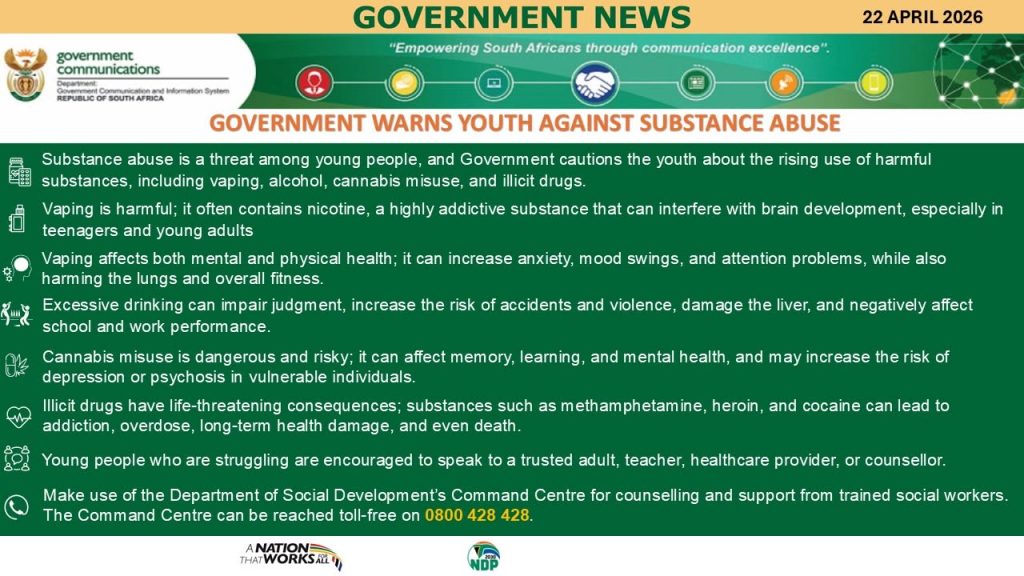
The human brain continues developing through adolescence and into young adulthood. Research indicates that cannabis affects areas involved in memory, learning, attention, decision-making, coordination and emotional regulation. The developing brain is particularly vulnerable to THC.
The CDC reports that cannabis use during adolescence may affect memory, learning, attention and school performance, with greater concern around regular or heavy use.
This doesn’t mean that every teenager who experiments with cannabis will suffer permanent damage. Human development is complicated, and factors such as frequency of use, potency, age of first use, genetics and environment all matter.
But it does mean parents should take early cannabis use seriously.
The younger the child and the more frequent the use, the greater the reason for concern.
The reality: children are already being exposed to cannabis
One of the biggest mistakes parents can make is pretending that cannabis doesn’t exist.
Children can encounter cannabis through friends, older siblings, social media, music, television, school environments and increasingly through the internet.
Some children will encounter cannabis surprisingly young.
By the early teenage years — and sometimes considerably earlier — some children will already know what cannabis is, what it looks like and how people use it.
That means the question isn’t necessarily:
“How do I stop my child from ever hearing about cannabis?”
It is:
“How do I make sure my child has enough knowledge and trust in me to make good decisions when they encounter it?”
Good parenting is better than fear
Parents don’t need to glorify cannabis.
But they also don’t necessarily need to create an environment where mentioning cannabis results in immediate punishment, screaming or shame.
Children are curious.
If a 12-year-old asks, “Dad, what is weed?” or “Why does Mom use cannabis?”, that question can become an opportunity for education.
Parents can explain that cannabis contains different compounds, including THC and CBD; that THC can produce an intoxicating effect; that cannabis affects young brains differently from mature adult brains; and that there are medical applications that are very different from recreational use.
Most importantly, children should know that they can talk to their parents without automatically being punished for asking a question.
That doesn’t mean there should be no boundaries.
It means the boundaries should be accompanied by education.
“If adults can use it, why can’t I?”
This is probably one of the questions parents will increasingly hear.
The answer is actually quite simple:
Because the law makes a distinction between adults and children, and because the developing brain is different from the adult brain.
We make similar distinctions with alcohol, tobacco and other adult products.
Legalisation is not the same thing as saying something is appropriate for every age group.
A parent can tell a teenager:
“Cannabis is something adults may legally use privately, but that doesn’t mean it is appropriate or legal for you to use.”
That is a much more honest explanation than pretending cannabis is some mysterious substance that nobody knows anything about.
Parents who use cannabis have an additional responsibility
For parents who choose to use cannabis, responsible behaviour becomes especially important.
Cannabis should be stored securely and completely out of children’s reach.
Edibles deserve particular caution because children may mistake cannabis-infused sweets, chocolates or baked products for ordinary food. The FDA specifically recommends keeping cannabis products away from children because accidental ingestion can cause serious problems.
Parents should also avoid consuming cannabis in front of children in circumstances that expose them to smoke or second-hand cannabis.
Research into second-hand cannabis exposure is still developing, but cannabis smoke contains THC as well as many of the toxic and cancer-causing chemicals found in tobacco smoke. Studies have also found associations between living with a cannabis user and detectable THC levels in children.
A responsible cannabis-using parent therefore has the same basic obligation as any responsible parent:
Keep intoxicating substances away from children.
Don’t confuse CBD with recreational cannabis
Another important conversation is the difference between CBD and THC.
CBD does not produce the same intoxicating “high” associated with THC. This distinction became particularly well known through cases such as Charlotte Figi.
But parents should not assume that every bottle labelled “CBD” is automatically safe for a child.
CBD products sold outside regulated medical systems can vary considerably in strength, purity and composition. The FDA has warned that, apart from approved medicines, many cannabis-derived products have not been evaluated for safety, effectiveness, dosage or drug interactions in children.
If a child has a serious medical condition, parents should therefore speak to an appropriately qualified medical professional rather than experimenting with cannabis products themselves.
What should a parent do if they discover their 12-year-old is using cannabis?
The first reaction is often anger.
But the first question should probably be:
“Why?”
Was it curiosity?
Peer pressure?
Bullying?
An older teenager supplying them?
Trying to fit in?
Stress?
Anxiety?
Problems at home or school?
Or simply experimentation?
The answer matters.
A child who has tried cannabis once is not necessarily a “drug addict”. Likewise, a child who is repeatedly using cannabis shouldn’t simply be labelled “a bad kid”.
Parents should establish what happened, how often it is happening, where the cannabis came from and whether other substances are involved.
Then set clear boundaries.
Explain the health and legal consequences.
Monitor behaviour and school performance.
And if cannabis use appears persistent or problematic, seek professional assistance.
Education beats ignorance
South Africa is entering a new era of cannabis policy.
Adults have greater legal rights around private cannabis use, the medical cannabis industry is developing, and cannabis is increasingly part of mainstream conversations.
Our children are growing up in the middle of that change.
That means parents, teachers and communities have an important job to do.
We shouldn’t tell children that cannabis is completely harmless.
But we also shouldn’t teach them that every person who uses cannabis is a criminal or that every cannabis-related medicine is equivalent to recreational marijuana.
The truth is more nuanced.
Cannabis can carry significant risks for developing brains, particularly when THC is used regularly during adolescence. At the same time, carefully regulated cannabinoid medicines can have legitimate medical applications, including in some children with serious conditions.
The challenge for parents is to teach children the difference.
The conversation starts before the first joint
By the time a child is 12, they may already have encountered cannabis.
That doesn’t mean they need to be introduced to it.
It means parents shouldn’t wait until the first crisis to start talking.
Talk about drugs.
Talk about peer pressure.
Talk about addiction.
Talk about why adults make different choices from children.
Talk about cannabis without glamourising it and without creating unnecessary fear.
Most importantly, build a relationship where your child knows they can come to you.
Because ultimately, the strongest protection isn’t simply a law, a school policy or a lecture.
It is a child who trusts their parents enough to ask questions before making a potentially dangerous decision.